Blog

  • Ng Mui Revered Master of the Shaolin Martial Arts

    Ng Mui Revered Master of the Shaolin Martial Arts

    Ng Mui Master of Shaolin

    Ng Mui, a revered master of the Shaolin martial arts, is a legendary figure whose impact on the world of martial arts is both profound and enduring. Her influence extends across various disciplines, including the origins of Natural Wing Chun, the development of the Five-Pattern Hung Kuen, and the incorporation of the Dragon Style in martial arts.

    Ng Mui’s legacy also encompasses the Wǔ Méi Pài in Shaolin history, the Tibetan White Crane in her teachings, and her role in popular culture. This comprehensive exploration delves into the significance of Ng Mui’s teachings, dispels myths surrounding her, and highlights her influence on the development of Wing Chun Kung Fu and its principles.

    It examines the continuation of her legacy by Ip Man and her intriguing role in resistance, along with her philosophical and technical contributions to martial arts. By delving into Ng Mui’s historical impact and her lasting influence on martial arts culture, this article aims to shed light on the remarkable legacy of a true martial arts pioneer.

    Ng Mui, a Revered Master of the Shaolin Martial Arts

    Ng Mui, an iconic figure in the history of martial arts, is revered as a master of the Shaolin Temple’s ancient fighting techniques, with her legacy spanning the rich landscapes of southern China and intertwining with the principles of Buddhism and the teachings of her monastic life as a revered Monk.

    Ng Mui’s contribution to the Shaolin martial arts culture is deeply rooted in history, as she played a pivotal role in the development and dissemination of these ancient fighting techniques. Her expertise and wisdom have had a profound impact, shaping the evolution of martial arts in southern China and beyond. Embracing the essence of Buddhist principles, Ng Mui’s teachings emphasized not only physical prowess but also mental discipline and spiritual harmony, thus setting a unique precedent in martial arts instruction.

    Origins of Natural Wing Chun

    The origins of Natural Wing Chun can be traced back to the legendary figure Ng Mui, a master of the Shaolin martial arts, who is believed to have imparted her profound knowledge and techniques to her disciple Yim Wing Chun, and subsequently to other renowned martial artists such as Leung Bok Chau, laying the foundation for a distinctive lineage of martial prowess rooted in the traditions of southern China.

    Ng Mui’s role in the development of Natural Wing Chun is deeply ingrained in the folklore of martial arts, often depicted as a wise and formidable female practitioner of the Shaolin disciplines. It is said that her teachings were not only physical but also deeply spiritual, imparting a holistic approach to martial arts. This transmission of knowledge and techniques to her disciples, particularly Yim Wing Chun, marked the beginning of a legacy that flourished through generations.

    The cultural significance of Natural Wing Chun is immense, as it represents a fusion of traditional Chinese combat methods with the wisdom and adaptability of its creators. The lineage of this martial art has become part of the rich tapestry of southern Chinese customs, embodying the resilience and prowess of its practitioners.”

    Ng Mui’s Impact on Wing Chun

    Ng Mui’s profound impact on Wing Chun extends beyond her role as a master, shaping the evolution of this martial art form and influencing prominent figures such as Ip Man, who further propagated the art through his teachings and its integration into the world of Kung Fu and Chinese Opera, solidifying Ng Mui’s legacy as a source of inspiration and a repository of legendary techniques.

    Ng Mui’s influence can be seen in the core principles of Wing Chun, emphasizing efficiency, directness, and practicality in combat. Her teachings laid the foundation for Wing Chun’s unique biomechanics and close-range fighting techniques, which have become hallmarks of the art. Her development of the wooden dummy training apparatus enhanced the art’s ability to strengthen and hone its practitioners’ skills.

    Ng Mui’s impact transcends physical techniques. She instilled philosophical principles such as humility, perseverance, and adaptability into the art, shaping the mindset of future generations of practitioners. Through her legendary techniques and holistic approach, Ng Mui’s legacy remains firmly embedded in the essence of Wing Chun, inspiring practitioners to this day.

    Five-Pattern Hung Kuen

    The Five-Pattern Hung Kuen, with its historical roots in the martial arts traditions of the Qing Dynasty in Fujian, stands as a testament to the enduring legacy of the Five Ancestors, encompassing a diverse array of techniques and combat principles that have permeated the fabric of martial arts history.

    The intricate connections woven into the Five-Pattern Hung Kuen reflect the rich heritage of traditional Chinese martial arts, preserving and passing down generations of expertise and wisdom. Originating from the renowned Five Ancestors, this distinctive style integrates the essence of precision, power, and fluidity. A unification of hard and soft techniques, it showcases a comprehensive approach to combat, incorporating stances, strikes, and intricate footwork. This martial art stands as a symbol of resilience and adaptability, entwined with the cultural tapestry of the Qing Dynasty.

    Dragon Style in Martial Arts

    The Dragon Style, steeped in the lore and martial traditions of southern China, embodies the graceful yet formidable essence of this legendary creature, with its techniques and combat philosophy leaving an indelible mark on the rich tapestry of martial arts history, perpetuating its status as a revered and awe-inspiring discipline.

    Legend has it that the Dragon Style draws inspiration from the mythical prowess and fluid movements of dragons, incorporating swift, serpentine motions and powerful strikes reminiscent of the creature itself. With origins shrouded in antiquity, this style carries the essence of ancient Chinese culture, reflecting the harmonious blend of strength and elegance. The Dragon’s influence extends far beyond the physical realm, symbolizing virtue, power, and wisdom in various philosophies.

    The Dragon Style transcends mere combat techniques; it represents a way of life, promoting discipline, respect, and perseverance. Through its intricate forms, practitioners embrace the spirit of the dragon, seeking balance, agility, and mental acuity. Its impact on the martial arts landscape endures, inspiring generations and contributing to the multifaceted fabric of martial arts evolution.

    Wǔ Méi Pài in Shaolin History

    The Wǔ Méi Pài, deeply embedded in the annals of Shaolin history, emerged as a profound martial arts tradition during the Ching Dynasty, fostering the cultivation of exceptional martial artists and carving its legacy as a revered and influential school of combat within the hallowed halls of the Shaolin Temple.

    Its inception during the Ching Dynasty marked a pivotal moment in the narrative of Shaolin martial arts, adding an illustrious chapter to the legacy of this ancient discipline.

    Wǔ Méi Pài’s emphasis on rigorous training and spiritual fortitude has contributed to the development of exceptional martial artists with unparalleled expertise.

    The school’s enduring legacy is etched in the annals of martial arts history, serving as a testament to its profound impact on the evolution of combat techniques.

    Tibetian White Crane in Ng Mui’s Legacy

    Tibetan White Crane, intricately intertwined with Ng Mui’s enduring legacy, represents a martial arts discipline steeped in legends and revered for its graceful yet devastating techniques, embodying the essence of Ng Mui’s profound influence on the art of combat and its enduring impact on the White Crane Temple.

    The graceful movements of Tibetan White Crane, often likened to the ethereal flight of the crane, are both mesmerizing and deceptive, concealing the ferocious striking capabilities that lie beneath. The legends surrounding its origins are as captivating as the art itself, with tales of mystical encounters and resilience woven into the fabric of its legacy. Ng Mui’s contribution to this discipline further elevates its significance, as her revered wisdom and expertise continue to inspire martial artists worldwide.

    Ng Mui in Popular Culture

    Ng Mui’s enduring presence in popular culture, resonating through legendary tales, mesmerizing performances in Chinese Opera, and the rich tapestry of Cantonese folklore, has firmly entrenched her as an iconic figure in the collective imagination, perpetuating her legacy as a symbol of martial arts prowess and cultural reverence.

    Ng Mui’s portrayal in legendary tales often captures her as an enigmatic and sage-like figure, imbued with wisdom, martial arts mastery, and a profound sense of justice. Her appearances in Chinese Opera performances have enthralled audiences with her graceful yet powerful movements, showcasing her as a formidable and revered character.

    Within Cantonese folklore, Ng Mui’s legendary exploits and teachings are weaved into the fabric of oral traditions, exalting her as a symbol of resilience, wisdom, and female give the power toment. Her pivotal role in shaping the foundations of Wing Chun, a renowned martial art, has further solidified her influence in global martial arts communities.

    Legends and Myths Surrounding Ng Mui

    The rich tapestry of legends and myths surrounding Ng Mui, interwoven with the legacy of Wing Chun and the mystique of southern China, has perpetuated her enigmatic stature as a martial arts icon, captivating the imagination with tales that transcend time and traverse the landscapes of Fujian and beyond.

    Ng Mui, believed to be one of the legendary Five Elders of the Shaolin Temple, is shrouded in mystery and folklore. Her mastery of Kung Fu, particularly the Wing Chun style, has become the stuff of legend, inspiring generations of martial artists. The narratives of her encounters with warlords, her defiance of injustice, and her ingenious development of a combat system that emphasized agility and practicality are interwoven with the cultural tapestry of southern China, adding depth and allure to her enduring legacy. The enigmatic tales surrounding Ng Mui continue to captivate martial arts enthusiasts, enriching the folklore of the region and elevating her to an iconic status.

    Ng Mui’s Influence on the Development of Wing Chun Kung Fu

    Ng Mui’s indelible influence on the development of Wing Chun Kung Fu, resonating through the teachings of renowned practitioners such as Leung Jan and Chan Wah Shun, has shaped the art into a revered discipline, perpetuating her legacy as a paragon of martial arts prowess and inspiring generations of practitioners with her timeless wisdom and legendary techniques.

    Ng Mui’s impact extended beyond her immediate disciples, shaping the very essence of Wing Chun Kung Fu and influencing its evolution through the generations. Her innovative principles of efficiency, directness, and practicality continue to define the core of this martial art, instilling a sense of adaptability and effectiveness.

    Ng Mui’s enduring legacy is not confined to historical narratives; it is infused within each punch, block, and stance practiced by Wing Chun enthusiasts today, embodying her as an iconic figure, silently guiding practitioners through the intricate web of techniques and philosophies.

    Ip Man: Continuing Ng Mui’s Legacy

    Ip Man, as a torchbearer of Ng Mui’s enduring legacy, played a pivotal role in continuing the propagation of Wing Chun, elevating its prominence in the realms of martial arts and leaving an indelible mark on the cultural landscape of Hong Kong and Macao with his dedication to preserving and promoting the art’s timeless legacy.

    His unwavering commitment to Wing Chun not only contributed to the art’s growth but also fostered a deep appreciation for its rich tradition and philosophy. Ip Man’s remarkable teachings attracted a dedicated following, and his impact reverberated globally, inspiring countless individuals to embrace the discipline and ethos of Wing Chun. His efforts in honing a generation of skilled practitioners underscored his profound influence on preserving and enriching this revered martial art.

    Ng Mui: The Nun Who Invented Wing Chun Martial Arts

    Ng Mui, revered as the nun who invented Wing Chun martial arts, stands as an enigmatic figure whose legacy transcends time, inspiring practitioners such as Yip Man and Leung Ting, and leaving an indelible mark on the tapestry of martial arts history with her profound teachings and legendary techniques.

    Her teachings, rooted in the core principles of balance, efficiency, and adaptability, continue to shape the practice of Wing Chun, emphasizing the importance of strategic positioning and swift, precise movements.

    Ng Mui’s innovative techniques, including the centerline theory and simultaneous defense and attack, reflect her deep understanding of combat dynamics and remain fundamental pillars of Wing Chun mastery.

    Practitioners around the world, drawn to the elegance and effectiveness of Wing Chun, revere Ng Mui as the architect of a martial art that embodies the graceful yet devastating spirit of its creator.

    Exploring Ng Mui’s Role in Resistance

    Exploring Ng Mui’s pivotal role in resistance, interwoven with the martial arts traditions of the Qing Dynasty and the landscapes of Fujian, unveils a narrative of courage, resilience, and indomitable spirit, as she became a symbol of give the power toment and fortitude in the face of adversity, perpetuating her legacy as an icon of resistance and martial prowess.

    The martial arts traditions during the Qing Dynasty provided a rich cultural backdrop, within which Ng Mui’s extraordinary leadership and skills were honed. Her story reflects the era’s emphasis on discipline, honor, and the pursuit of excellence, give the power toing her to transcend gender barriers and embody the essence of resilience. Ng Mui’s indomitable spirit, epitomizing the strength of character and tenacity, resonates as a beacon of hope and inspiration, inspiring generations to stand against oppression and uphold their beliefs with unwavering resolve.

    Beauty and the Beast: Ng Mui’s Martial Arts Philosophy

    The duality of beauty and the beast encapsulates Ng Mui’s martial arts philosophy, as her legendary techniques and timeless wisdom are intertwined with the captivating allure of Chinese Opera, creating a compelling narrative that blends artistry and combat prowess, perpetuating her enduring legacy as a paragon of martial arts philosophy and cultural resonance.

    Ng Mui’s approach to martial arts was intricately linked to the elegance and precision found in Chinese Opera. The fluidity of movement, intricate hand gestures, and emotive storytelling within the art form inspired her to infuse grace and finesse into her combat techniques. This fusion of artistry and physicality captured the essence of her martial arts philosophy, emphasizing not just the raw power and efficiency of combat, but also the grace and beauty inherent in every motion, making her techniques as beautiful to watch as they were effective in action.

    Snake and Crane: Ng Mui’s Martial Arts Techniques

    The legendary techniques of Snake and Crane, attributed to Ng Mui’s martial prowess, embody an intricate fusion of grace and precision, capturing the essence of these revered creatures and perpetuating her enduring legacy as a maestro of combat techniques that transcend the realms of martial arts folklore and cultural resonance.

    Snake and Crane techniques showcase the fluidity and agility of these animals, emphasizing speed, flexibility, and power in combat. Ng Mui’s ingenuity in emulating their movements has left an indelible mark on the martial arts world. The serpentine fluidity of Snake style exemplifies quick strikes and intricate footwork, while the regal movements of Crane style emphasize elegance and counterattacks.

    Both styles emphasize the utilization of the body’s natural mechanics and leverage, tracking closely to the animalistic principles of their namesakes. These techniques have transcended generations, persisting in various martial arts disciplines and inspiring awe and admiration for their skillful grace and precise execution.

    References on Ng Mui and Wing Chun

    Exploring references on Ng Mui and Wing Chun, deeply rooted in the rich tapestry of martial arts and the legends of Fujian, provides a captivating insight into the narratives and historical accounts that perpetuate her enduring legacy as an iconic figure in the realm of martial arts and folklore.

    The stories of Ng Mui and Wing Chun are deeply intertwined with the development of martial arts in China. Ng Mui, an ancient female martial artist, is believed to be one of the legendary Five Elders of Shaolin, renowned for her extraordinary skills and wisdom. Wing Chun, a form of martial arts bearing her name, reflects her innovative techniques and principles.

    The legends of Fujian further evoke the mystique surrounding Ng Mui, adding layers of intrigue to her enduring legacy. Through these narratives, her influence on martial arts and folklore continues to captivate enthusiasts and scholars alike.

    Exploring Ng Mui’s Influence in Martial Arts Culture

  • Which is The Best Wing Chun Dummy

    Which is The Best Wing Chun Dummy

    Looking for a wooden dummy to perfect your trapping? That will probably depend on which type you are used to training with at your studio. Lets dig deeper!

    Wing Chun Dummy – Historical Overview

    The origins of the Wing Chun Dummy are shrouded in mystery. Was it conceived before or after the development of Wing Chun Kung Fu? This question remains an enigmatic challenge, demanding extensive scholarly exploration. Within the Chinese Kung Fu community, various theories circulate, offering intriguing possibilities.

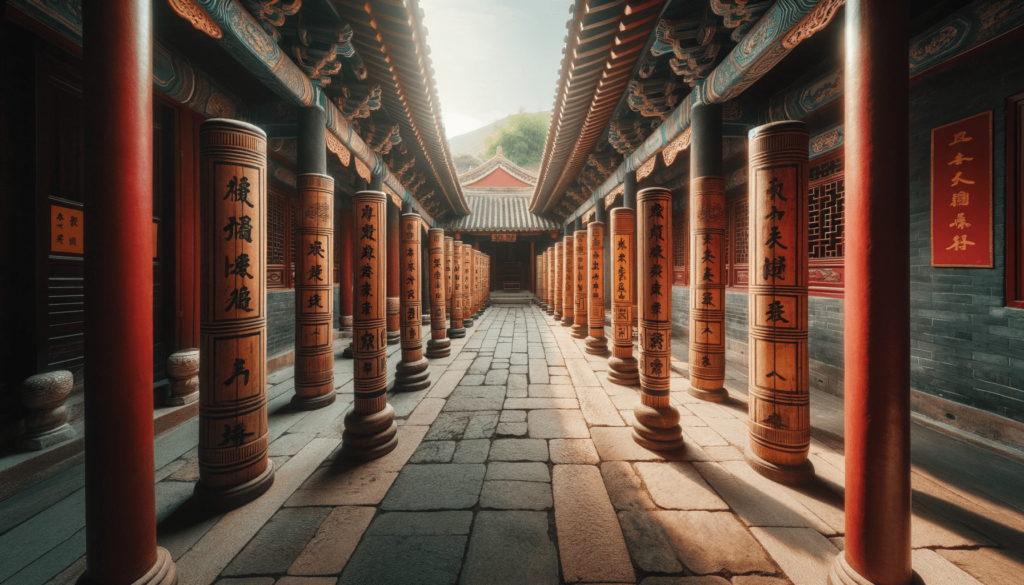
    Wooden Dummy Alley within the Siu Lam monastery

    Legend tells of a “Wooden Dummy Alley” within the Siu Lam monastery. Supposedly, this alley housed an array of wooden dummies with diverse configurations, designed for rigorous training. Initially, the wooden dummy might have been nothing more than a basic upright stake, replacing a live sparring partner. Over time, Wing Chun Kung Fu pioneers refined this apparatus into its current form with three arms and a leg. Likewise, the associated training exercises evolved from rudimentary actions into the sophisticated “Wooden Dummy Techniques” practiced today.

    Wing Chun Dummy – Variants

    Dai Jong or Ground Dummy

    The Dai Jong or Ground Dummy, an ancestor of today’s models, was traditionally buried underground. Its significance stemmed from its ability to enhance footwork, strength, sensitivity, and comprehension. Measuring 8 1/2 feet in length and 9 inches in diameter, the lower 3 1/2 feet of the Dai Jong was fashioned into a square shank, then buried in a hole padded with shredded rattan. This construction granted the Jong a spring-like quality and prevented rotation during practice.

    Gua Jong or Hanging Dummy Relocation constraints led Ip Man, unable to bury his dummy in Hong Kong, to innovate the Gua Jong or Hanging Dummy. This “live” variant, mounted on a stand rather than buried, contrasts with the traditional “Dead Dummy,” the Dai Jong. Thus, the Hanging Dummy we know in Wing Chun and other martial arts today owes its design to Grandmaster Yip Man.

    Wing Chun Dummy Specifications and Description

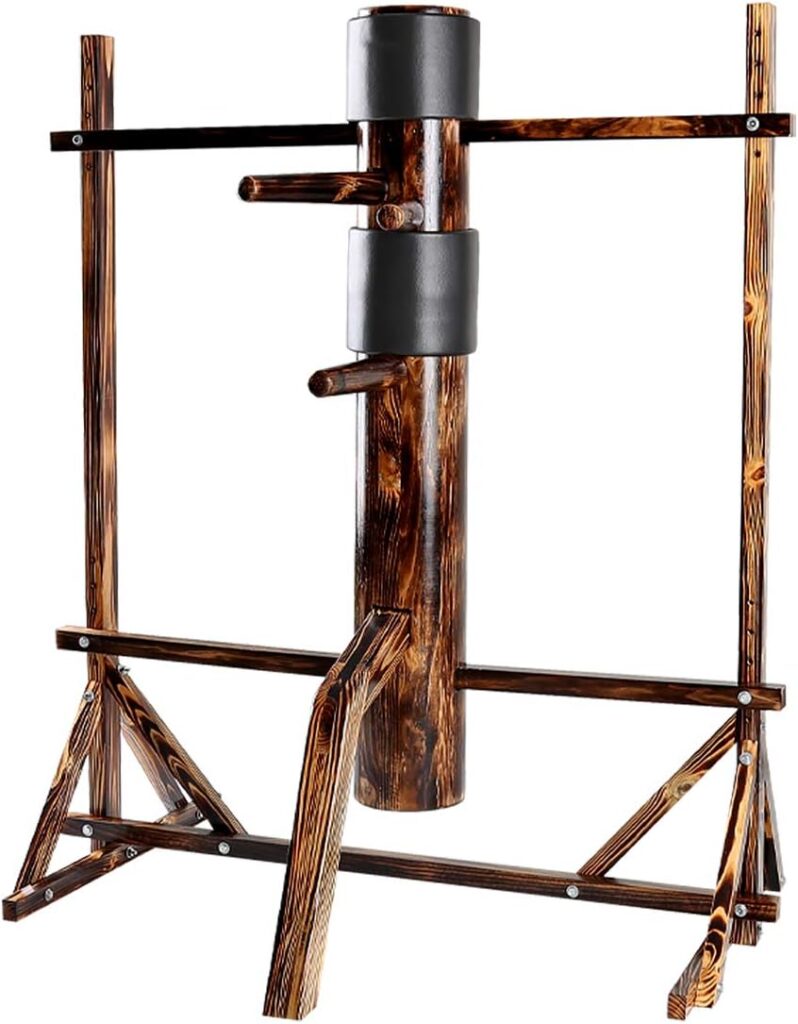
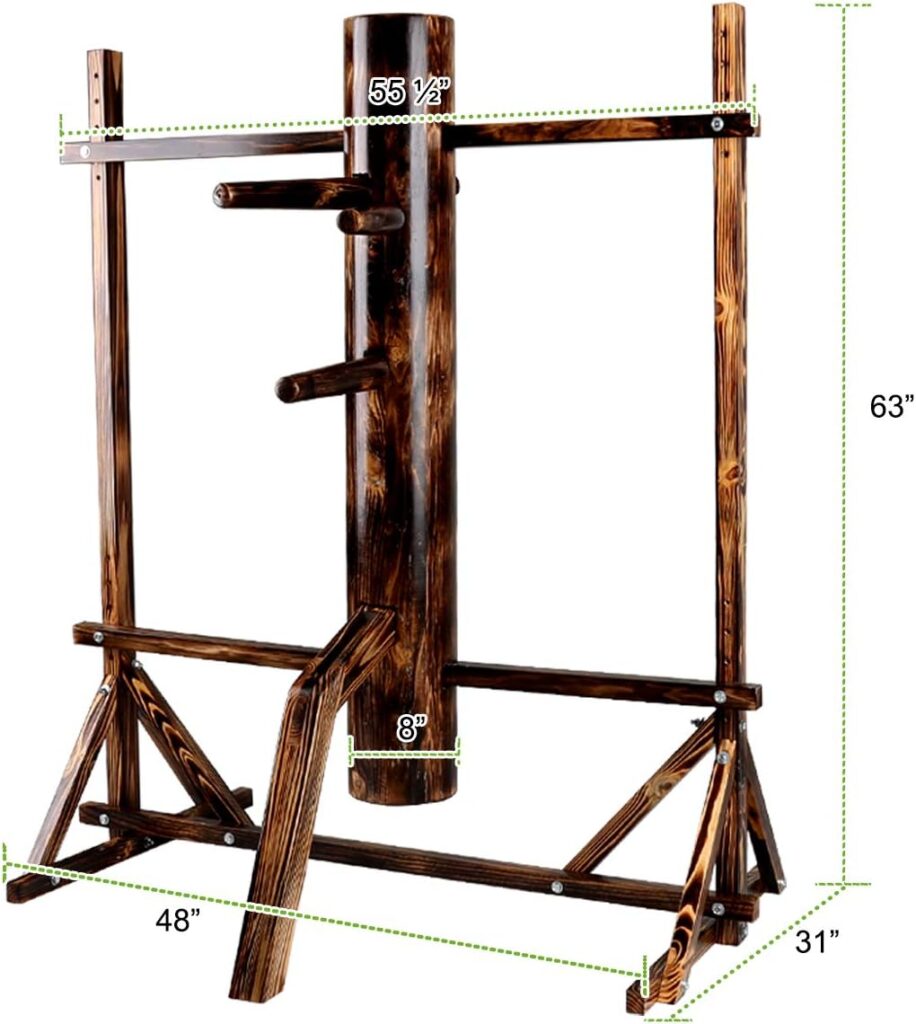
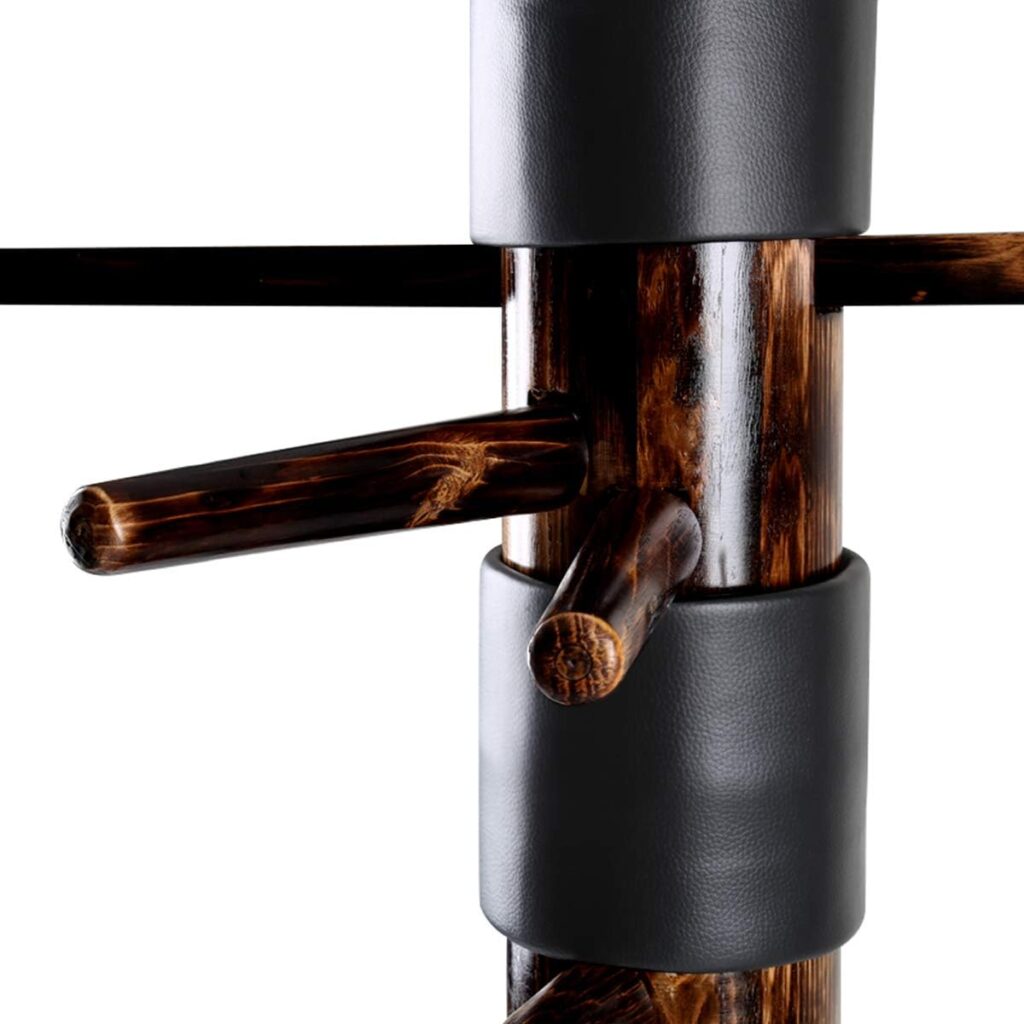
    The main body of the Wing Chun Dummy is a cylindrical trunk approximately 5 feet long and 9 inches in diameter. Two “upper arms” protrude from equally high mortises, a “middle arm” from a lower mortise, and a “dummy leg,” thicker than the arms, extends from the lowest mortise. These components are anchored to a supporting frame with two cross-bars attached to perpendicular square pillars, ensuring stability against forceful strikes.

    Which One is Best?

    I was recently at a buddy of mines studio and they had this particular one. The Flex HQ Adjustable Height Wing Chun Dummy and I’m excited to share my experience with you. As a martial arts enthusiast, I’ve been looking for a high-quality training dummy for a while, and this one definitely caught my eye. In this review, I’ll walk you through the pros and cons of this product, giving you an honest and detailed look at what it has to offer. By the end of this, you’ll have a clear idea of whether this dummy is the right fit for your training needs.

    Wing Chun Dummy for sale

    Pros and Cons

    What We Liked

    • The adjustable height feature is a game-changer. It allows multiple users of different heights to use the dummy comfortably, making it a versatile option for group training sessions.
    • The sturdy solid wood build gives the dummy a durable and reliable feel, ensuring that it can withstand intense training sessions without breaking or wearing down quickly.
    • The extra padding with 2 striking pads provides added protection, making the training experience safer and more comfortable.
    • The option to return the product for a full refund if not satisfied gives peace of mind and shows the manufacturer’s confidence in the quality of their product.
    • The fast delivery and easy setup process make the overall experience of getting this dummy hassle-free and convenient.
    wing chun dummy measurements

    What Can Be Improved

    • The wood/glue used in the construction of the dummy may not hold up well in humid conditions, leading to potential splitting and other structural issues over time.
    • Some users may find that the product has cosmetic flaws and cracks, which could affect the overall aesthetic and potentially raise concerns about long-term durability.

    Quick Verdict

    After spending some time with the Flex HQ Adjustable Height Wing Chun Dummy, I can confidently say that it’s a solid choice for those looking to enhance their martial arts training. The adjustable height feature, sturdy wood build, and extra padding make it a versatile and reliable option for both beginners and experienced practitioners. While there are some concerns about long-term durability and cosmetic flaws, the overall value for the price point makes it a worthwhile investment for anyone serious about their training. If you’re in the market for a quality wing chun dummy that offers great functionality and convenience, I highly recommend giving this one a try. You can find more information and purchase the product here.

    Unboxing – What’s Inside?

    wing chun dummy arms

    I recently purchased the Flex HQ Adjustable Height Wing Chun Dummy Mook Yan Jong IP Man Training Target Wood with Frame Stand on Amazon to enhance my Wing Chun training at home. I was pleasantly surprised by how quickly the product was delivered, arriving within 2 days of placing my order. When I opened the box, I found a well-packaged and sturdy wooden dummy along with the frame stand.

    Specifications

    • Brand: Flex HQ
    • Sport: Wing Chun
    • Color: Wood
    • Date First Available: March 11, 2020
    • Manufacturer: Flex HQ
    • Sport Type: Wing Chun

    Features – What We Found

    The Wing Chun Dummy is made of high-quality solid wood, ensuring durability and stability during training sessions. The solid wood build provides the necessary resistance for practicing strikes and kicks, making it an ideal choice for Wing Chun practitioners of all levels.

    Pro-tip: To maintain the longevity of the wooden dummy, regularly inspect for any signs of wear and tear, and apply wood conditioning oil to keep it in top condition.

    The Wing Chun Dummy features an adjustable height, allowing multiple users of varying heights to comfortably practice their techniques. This means that whether you are tall or short, you can easily adjust the height of the dummy to suit your needs. This feature makes it a versatile option for training in different environments.

    The Wing Chun Dummy is equipped with 2 striking pads, providing extra protection during training sessions. These striking pads are strategically placed to simulate realistic striking surfaces, allowing practitioners to hone their techniques without the risk of injury. The extra padding ensures a comfortable and safe training experience.

    Purchase without hesitation!

    As a Wing Chun practitioner, I appreciate the peace of mind that comes with the satisfaction guarantee. Knowing that I can return the product for a full refund if I am not completely satisfied gives me confidence in the quality of the Wing Chun Dummy. It’s a testament to the manufacturer’s confidence in their product, and it reassures me as a consumer.

    Pro-tip: Take advantage of the satisfaction guarantee by testing the Wing Chun Dummy extensively during the trial period to ensure it meets your training needs.

    Full refund if not satisfied

    For those considering the Wing Chun Dummy, it’s important to note that the manufacturer offers a full refund if you are not satisfied with the product. This reflects their commitment to customer satisfaction and confidence in the quality of their training equipment. It’s a reassuring feature that provides peace of mind when making a purchase decision.

    Review and Scores

    Our Score: 91.0

    As someone who has been practicing Wing Chun for years, I can confidently say that the Flex HQ Adjustable Height Wing Chun Dummy is a game changer. The sturdy solid wood build and adjustable height make it perfect for multiple users, and the extra padding with 2 striking pads provides the necessary protection during training. I was initially hesitant about purchasing a wooden dummy, but I am so glad I did. It has truly enhanced my training experience and helped me perfect my techniques. If you are serious about your Wing Chun practice, I highly recommend investing in this dummy. Check it out here!

    Not only is the product of high quality, but the customer service and return policy are also exceptional. The fact that I can purchase without hesitation and return it for a full refund if I am not satisfied speaks volumes about the company’s confidence in their product. The reviews and ratings speak for themselves, and I can attest to the positive experiences shared by other users. This wooden dummy has become an integral part of my training routine, and I am extremely satisfied with my purchase. It is definitely worth the investment for any Wing Chun practitioner.

    Overall, the Flex HQ Wing Chun Dummy exceeded my expectations and has become an essential tool in my training arsenal. It is a great value for the money, and the product rating of 4.6 with 88 total ratings is a testament to its quality and performance. If you are looking for a reliable and durable wooden dummy for your Wing Chun practice, look no further. I am confident that you will not be disappointed with this product. Get your hands on it now!

  • What to Wear Under BJJ Gi and No Gi

    What to Wear Under BJJ Gi and No Gi

    Ladies for Training in a Brazilian Jiu Jitsi Gi

    For training in the Gi, opt for a breathable shirt paired with shorts or pants. Gis can become quite hot and heavy, so wearing fewer and thinner layers underneath is advisable.

    It’s customary to have some form of undergarment beneath your Gi, as pants might slip during a roll. Your shirt should ideally be made of moisture-wicking fabric to keep sweat at bay and avoid dense cotton that holds in heat. “Rash guards,” or BJJ-specific tops, are an excellent choice and are available at your school or you can go online at Amazon.

    If you choose to wear pants, select snug athletic ones and steer clear of heavy or cotton fabrics. Shorts of any type are generally acceptable for Gi BJJ, provided they are snug and comfortable. As your clothes will likely be pulled during practice, wearing close-fitting athletic wear underneath will help keep you cool and comfortable under your Gi.

    The Benefits of Wearing a Rash Guard

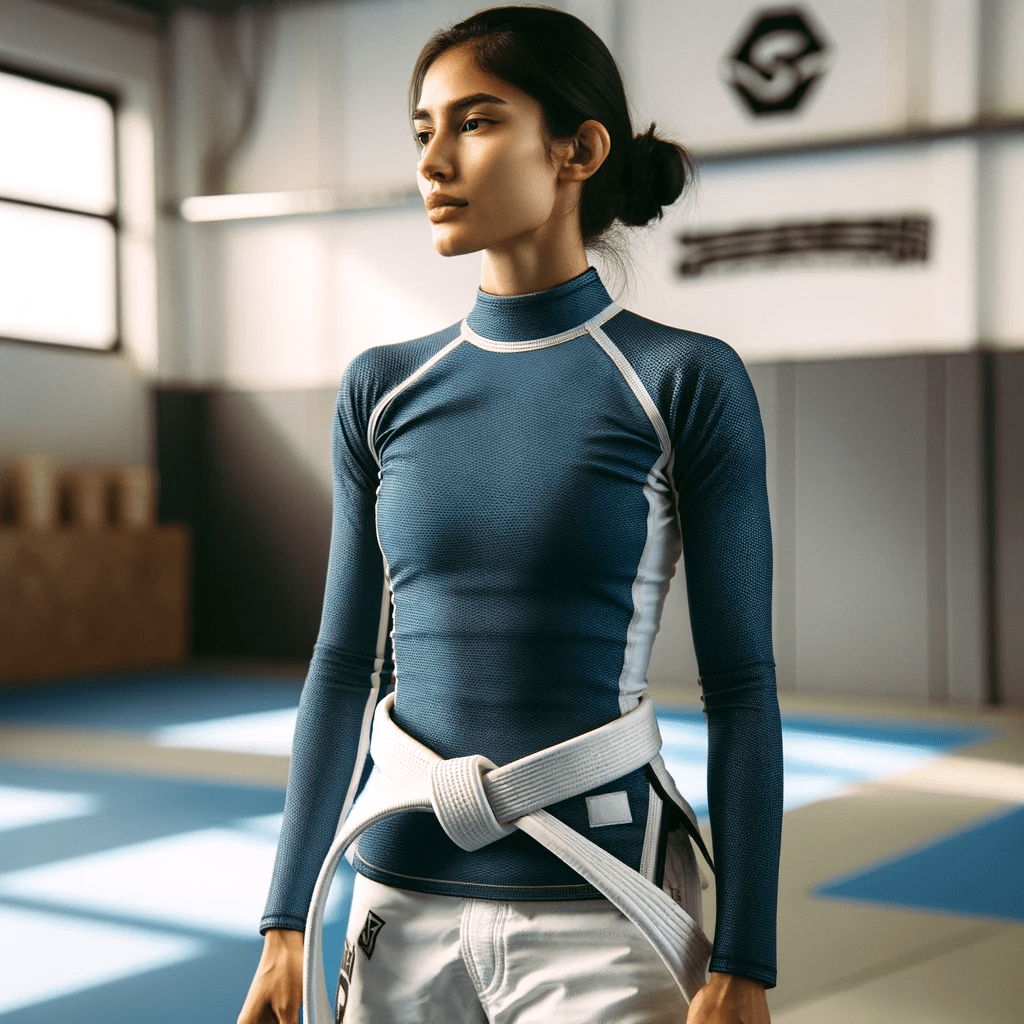
    rash guard under her traditional white Brazilian Jiu-Jitsu gi

    Wearing that rash guard beneath your uniform gi during BJJ sessions brings numerous advantages. Primarily, it serves as an added layer of defense for your skin, significantly lowering the chance of friction-related burns and mat-induced rashes. The snug material acts as a shield, diminishing the direct contact and abrasion your skin experiences. This is particularly beneficial for individuals with delicate skin or those susceptible to skin irritations.

    Moreover, a rash guard aids in maintaining a stable body temperature throughout your training. Constructed from materials that wick away moisture, these garments keep you cooler and drier by effectively drawing sweat from your body. This feature proves invaluable during vigorous training bouts, helping you remain comfortable and focused.

    Additionally, rash guards offer a layer of warmth, a boon in cooler training settings or during the winter season. This extra insulation ensures you stay warm, making your training experience more comfortable.

    In essence, incorporating a rash guard into your BJJ attire offers enhanced protection, comfort, and helps regulate your body temperature. When selecting one, prioritize a reputable brand known for quality and ensure a good fit to fully enjoy these benefits. Even those who practice traditional martial arts are wearing rash guards under their karate uniforms.

    For No Gi Class Make Sure Its Light Weight

    In No-Gi classes, it’s also best to wear lightweight, athletic attire. This not only helps you stay cool and dry but also prevents entanglement during rolls which can occur with loose or shorts with pockets.

    Rash guards are preferred for No Gi for their snug fit and moisture-wicking properties. For shorts, choose options like running shorts that are typically closer fitting and pocket-free. Tight synthetic polyester shorts or pants, often referred to as spandex, are ideal as they wick away moisture and reduce the chance of snags. Spats or leggings are a popular choice because they’re close-fitting, absorb sweat, and maintain modesty.

    Tank tops are not recommended ladies, and men should wear shorts over their leggings. The key to BJJ attire is comfort, functionality and safety.

  • 18 of the Most Difficult Martial Arts To Learn

    18 of the Most Difficult Martial Arts To Learn

    Are you ready to explore the world of the most challenging martial arts to learn? From the intense discipline of Brazilian Jiu-Jitsu to the ancient and intricate techniques of Kalaripayattu, we are about to delve into the fascinating world of the toughest martial arts. Each of these disciplines requires dedication, physical prowess, and mental fortitude. Whether it’s mastering the 10,000 moves of Bokator or the surprising inclusion of Tai Chi on this list, we will uncover what makes these martial arts so notoriously difficult to master. Get ready to be intrigued and inspired as we take a closer look at the 10 most difficult martial arts to learn.

    Mastering any martial art is a formidable challenge that demands unwavering discipline, commitment, and unparalleled dedication to the art of combat and self-defense. Whether you are man or woman it takes a heck of a lot of commitment, blood sweat and yes tears!

    Practitioners face numerous obstacles in their journey towards mastery. The rigorous physical training builds stamina, strength, and agility, testing the limits of their bodies. Mastering the intricate combat techniques requires countless hours of repetition and refinement, pushing individuals to the edge of their mental and physical capacities. The philosophical aspects of discipline and aggression demand a profound understanding of how to balance these conflicting forces, shaping not only one’s combat prowess but also their character and mindset.

    Brazilian Jiu-Jitsu: Cauliflower Ear Challenge

    Brazilian Jiu-Jitsu: This style is considered one of the hardest to learn and the belt rankings take a long time. Usually 2-4 years per belt. This ground-fighting focused martial art is intricate, leveraging technique over brute strength to subdue larger opponents. You can usually recognize these fighters from the cauliflower ear! Not all have it but many do. Mastery of Brazilian Jiu-Jitsu is a long journey, requiring years of dedicated practice. It’s a popular choice for self-defense and professional MMA fighters, emphasizing the strategic aspect of martial arts.

    Originating from Israel, Krav Maga

    Krav Maga: Originating from Israel, Krav Maga is a formidable self-defense technique, notorious for its rigorous physical and mental demands. This hybrid martial art synthesizes elements from Aikido, Judo, boxing, and wrestling, creating a dynamic blend of striking and grappling methods. Students are trained in swift counter-attacks, sharpening their situational awareness and preparing them for defense in any scenario.

    Physically demanding Muay Thai

    Muay Thai: From Thailand, Muay Thai is an intense, physically demanding art known for its stand-up striking and clinching techniques. It demands cardiovascular endurance and the ability to execute powerful and precise strikes. Recognized for its difficulty, it’s a preferred method for self-defense and conditioning. Be prepared to get kicked in the legs – a lot!

    Get in the Cage MMA

    Mixed Martial Arts (MMA): MMA is a composite combat sport incorporating techniques from diverse martial arts. One of the most challenging to learn, it demands proficiency in multiple styles, from striking to grappling. Fighters must be physically and mentally agile, embodying strength, balance, and strategic acumen.

    Feeling Flexible TKD

    Taekwondo: As the most practiced martial art worldwide and an Olympic sport, Taekwondo requires speed, agility, and power. It encompasses a wide range of kicks, punches, and blocks, necessitating considerable flexibility and discipline. Achieving black belt status is a prolonged commitment, demanding mastery over complex forms and techniques.

    The Ground Hits You Judo

    judo can be a hard martial art to study

    Judo: This Japanese art focuses on throws, grappling, and a mix of pins, joint locks, and chokes. Judo is a challenging discipline, demanding intense physical fitness and the ability to execute complex maneuvers. It’s a path of rigorous training but offers profound rewards in discipline, respect, and perseverance.

    Watch Out Its a Trap – Trapping Techniques of Wing Chun

    Wing Chun: Even though it was invented by a woman, don’t think its soft or easy! Known for its practical approach to self-defense, Wing Chun is a traditional Chinese martial art. It emphasizes structure, technique, and balance, utilizing softer techniques like trapping and redirection. It’s an effective form of defense that doesn’t rely on brute strength, making it accessible to various individuals.

    If you Like Getting Hit With Bamboo Kendo is For You

    Kendo: Translated as “the way of the sword,” Kendo is a Japanese art based on traditional swordsmanship. Practiced with bamboo swords and protective gear, it’s as mentally demanding as it is physical, requiring a strong commitment to master. Kendo is not just about physical skill but also about upholding a strong sense of etiquette and mental discipline.

    JKD and The Intercepting Fist

    Jeet Kune Do: Created by Bruce Lee, Jeet Kune Do is a fusion of various martial arts, emphasizing simplicity and efficiency. Practitioners learn to neutralize opponents swiftly using body mechanics, timing, and positioning. It’s a sophisticated art form that forgoes brute force for precision and effectiveness.

    Softness Needs Patience with Aikido

    Aikido: This Japanese discipline is renowned for its difficulty, centering on harmonizing with an attacker’s movements to use their energy against them. Practitioners of Aikido become adept at redirection, throws, and pins, focusing more on control than direct confrontation. It’s a martial art that marries patience, skill, and precise timing.

    8 Lesser Known Martial Art Styles

    Just because it isn’t well known doesn’t mean it isn’t a good martial art or that it is easy to learn!

    Bokator: 10,000 Moves!

    Bokator is an ancient Cambodian martial art that is often considered one of the oldest fighting systems in the region. Its history dates back thousands of years, with depictions of its techniques found carved into the walls of the Angkor Wat temple complex. The name “Bokator” translates to “pounding a lion,” reflecting its power and ferocity.

    Bokator is comprehensive, encompassing a wide range of techniques including strikes, throws, joint locks, and ground fighting. Practitioners use their elbows, knees, feet, fists, and even shoulders to deliver powerful strikes. The art is also known for its animal-inspired techniques, where fighters emulate the movements and tactics of animals such as the lion, bird, horse, and snake.

    In addition to hand-to-hand combat, Bokator practitioners are trained in the use of traditional weapons like sticks, spears, and swords. The martial art is not just about fighting; it also includes a strong spiritual component, with elements of meditation and a deep respect for one’s ancestors and traditions.

    Bokator nearly vanished during the Khmer Rouge regime, as many martial artists were persecuted, but efforts have been made to revive and preserve it in recent years. Today, Bokator is recognized as an important part of Cambodian cultural heritage and is practiced both as a form of cultural preservation and as a functional martial art. It’s taught in schools and clubs in Cambodia and has been gaining international attention as well.

    Rough And Tumble: Not As Sweet As It Sounds

    Rough and Tumble, also known as Gouging or Backwoods Fighting, is a form of martial arts or fighting style that originated in the United States, particularly in the Southern and frontier regions during the 18th and 19th centuries. It’s not a martial art in the traditional sense but rather a no-holds-barred type of combat known for its brutal and often gruesome techniques.

    Rough and Tumble fighting was less about sport and more about personal survival or serious conflict. It had very few rules, if any, and was characterized by its focus on inflicting severe injury to the opponent. Common tactics included eye-gouging, biting, and other forms of maiming. The goal was typically to incapacitate the opponent by any means necessary, reflecting the harsh realities of life in the rural and lawless regions where this style emerged.

    Unlike other martial arts, Rough and Tumble wasn’t formally taught in schools or academies but was learned through personal experience and community traditions. It’s a testament to a rugged period in American history and reflects the sometimes violent nature of early American society. Today, it’s not practiced as a martial art but is studied as a historical and cultural phenomenon, reflecting the early American spirit of toughness and resilience.

    Bakom: Street Fighting With A Difference

    Bakom, also known as “Vacon” or “Vakom,” is a Peruvian martial art designed for street fighting and self-defense. It combines elements from various martial arts and fighting techniques, including boxing, jiu-jitsu, and traditional Andean fighting practices. Bakom is known for its brutal efficiency and is characterized by its use of deceptive movements, vicious strikes, locks, and pressure point attacks.

    The art form was developed in the impoverished areas of Lima, Peru, as a means for individuals to protect themselves in the harsh street environment. It is designed to be practical and effective, emphasizing real-world combat scenarios and survival tactics. Bakom practitioners are trained to use their environment to their advantage and to end confrontations quickly and decisively. Despite its violent reputation, Bakom is also said to instill discipline and respect in its practitioners, with a strong emphasis on self-control and the responsible use of force.

    Lerdrit: A Truly Thai Martial Art

    Lerdrit is a Thai martial art developed from traditional military training techniques used by the Royal Thai Army. It’s closely related to Muay Thai but differs in that it’s specifically designed for combat and self-defense rather than sport. Lerdrit emphasizes rapid, powerful strikes, usually delivered with the elbows and knees, as well as joint locks, holds, and throws. The art is known for its directness and efficiency, focusing on quickly neutralizing threats with strong, decisive moves. Lerdrit is considered an important part of Thai military training and cultural heritage, reflecting the country’s history and martial traditions.

    Dambe: Getting Stoned To Fight

    Dambe, characterized by its unique tradition of fighters getting stoned before combat, presents a distinctive and challenging martial art that demands rigorous training and relentless practice from its practitioners.

    Jailhouse Rock: American Prison Fighting

    Jailhouse Rock, rooted in the American prison system, offers a formidable challenge for fighters aiming to master its self-defense and combat techniques through rigorous and focused training.

    Kalaripayattu: The Oldest Martial Art?

    Kalaripayattu is an ancient Indian martial art from the southern state of Kerala. Often referred to as one of the oldest fighting systems in existence, it’s believed to date back as far as the 3rd century BCE. Kalaripayattu includes strikes, kicks, grappling, preset forms, weaponry, and healing methods.

    The art form is deeply linked to the culture and spiritual traditions of the region, incorporating elements of Hinduism and focusing on the development of the mind, body, and spirit. Practitioners of Kalaripayattu undergo rigorous training, which includes learning various combat techniques and physical conditioning, as well as understanding the body’s vital points called “marmas.”

    Kalaripayattu is not just a form of combat; it’s also considered a way of life that enhances physical fitness, improves concentration, and fosters discipline. It’s often said that this martial art influenced the development of other Asian martial arts due to historical migration and cultural exchange. Today, Kalaripayattu is practiced both as a form of cultural expression and as a functional martial art, with demonstrations, classes, and workshops being held around the world.

    Okichitaw: Native American Warrior Training With An Asian Twist

    Okichitaw is a martial art developed by George J. Lépine, a martial artist of Plains Cree descent, based on the traditional fighting techniques of the Plains Cree First Nations. It’s a unique system that combines indigenous North American combat methods with the influences of modern combat systems. Okichitaw was created to preserve and promote the martial heritage of Native American warrior societies.

    The art incorporates various aspects of traditional Native American warfare, including weapons training, hand-to-hand combat, and strategic thinking. Practitioners learn to use traditional weapons like the tomahawk, knife, and bow, alongside unarmed techniques involving strikes, throws, and joint locks. The movements in Okichitaw are often inspired by the natural movements of animals and the rugged terrain of the Plains.

    Okichitaw is not only about physical combat; it also emphasizes respect, courage, and honor, reflecting the values of the warrior societies from which it originates. Practitioners are taught to apply these principles in their daily lives, promoting a sense of discipline, confidence, and cultural identity. As a martial art, Okichitaw provides a link to a rich cultural heritage while offering a practical method of self-defense and personal development.

    .

    While all martial arts present their unique challenges, some stand out for their complexity and the dedication they demand. Karate and Kung Fu, for example, are intricate in their techniques and forms. Similarly, Muay Thai, Taekwondo, and Brazilian Jiu-Jitsu are notably challenging, each in their way. Ultimately, the most demanding martial art is the one to which you commit fully and strive to master.

  • Yuenü: Into the World of Swordswoman

    Yuenü: Into the World of Swordswoman

    Introducing Yuenü: A Fascinating Dive into the World of Swordswoman from the State of Yue

    In the vast and intricately woven tapestry of Chinese mythology and folklore, Yuenü stands as a compelling figure, revered for her exceptional prowess as a swordswoman and her enigmatic persona. As we delve into the profile and background of this captivating character, we’ll uncover the rich layers of her appearance and delve into the depths of her complex personality. From her remarkable roles and abilities to the awe-inspiring Noble Phantasms she possesses, Yuenü’s story is nothing short of enthralling.

    Throughout history, Yuenü has been celebrated for her remarkable combat skills, wielding her sword with unparalleled mastery. Beyond her martial prowess, she possesses specialized skills that set her apart in the realm of mythical heroes and heroines. But it is her Noble Phantasms, Yuè Wáng Gōu Jiàn and Jiutian Xuannü, that truly elevate her to the status of a legendary figure.

    As we explore Yuenü’s world, we’ll also encounter the echoes of her presence in various adaptations and cultural references. From plot summaries to the diverse array of characters in adaptations, and even intriguing trivia and translations, the influence of Yuenü reverberates through the annals of literature and pop culture.

    Join us on this exhilarating journey as we unravel the mysteries and marvels of Yuenü’s tale, immersing ourselves in a world where courage and skill intertwine to create an unforgettable legacy.

    Introduction to Yuenü

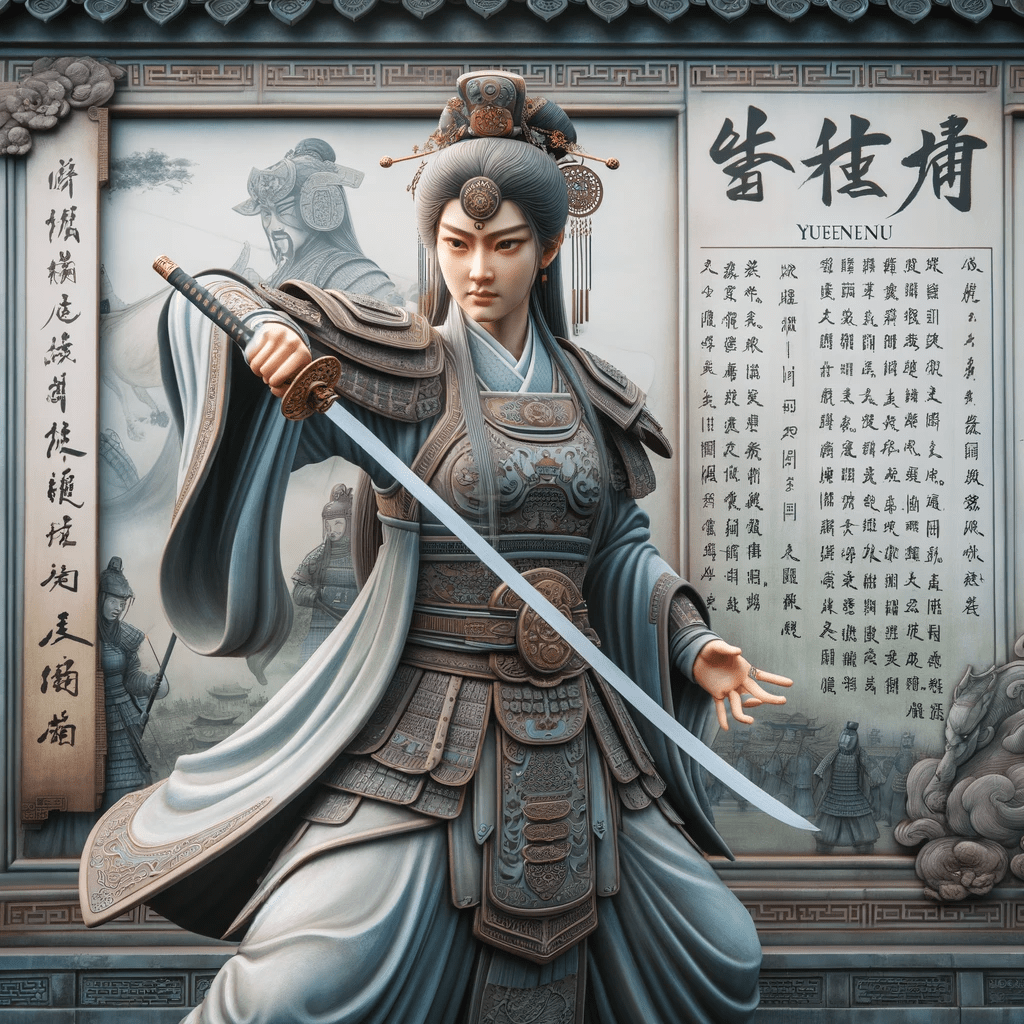
    Yuenü, also known as Lady Yue, is a legendary figure from ancient China, celebrated for her remarkable skills in Chinese martial arts and archery. She is closely associated with King Goujian of the Southern Forest and is revered for her mastery of bronze swords and profound understanding of Yin Yang principles.

    According to Chinese mythology and historical records, Yuenü’s exceptional talent in martial arts and archery caught the attention of King Goujian. Her remarkable feats and unwavering loyalty earned her a prominent place in the court, where she became the king’s trusted advisor and martial arts mentor.

    Yuenü’s expertise in Chinese martial arts extended to her proficiency in wielding bronze swords, an essential skill that not only showcased her mastery but also contributed to the defense of the Southern Forest. Her unparalleled abilities in combat and strategic thinking earned her the reputation of being instrumental in King Goujian’s military victories.

    Yuenü’s association with the Southern Forest and her deep understanding of Yin Yang principles placed her within the intricate tapestry of Chinese cultural and mythological contexts. Her legacy not only highlights her prowess as a warrior but also represents the embodiment of ancient Chinese values and philosophical concepts.

    Profile and Background

    The profile and background of Yuenü, also known as Lady Yue, are deeply rooted in the historical narratives of the Spring and Autumn era, particularly within the context of the Chu and Wu states. Her portrayal in Jin Yong novels, along with her association with pivotal figures such as King Helü, Sun Tzu, and the enigmatic Aqing, Fan Li, and Xi Shi, captures the essence of her legendary status.

    Yuenü, a remarkable figure in Chinese history, was renowned for her intelligence, grace, and resilience. Her connections with influential individuals extended beyond her storied romance with King Helü of Wu to her involvement in the stratagems of Sun Tzu, the celebrated military tactician. Her character in Jin Yong’s novels vividly illustrates her multifaceted persona, weaving together her romantic entanglements and strategic alliances in the tumultuous political landscape of ancient China.

    Appearance and Personality

    Yuenü, also referred to as Lady Yue, is often depicted as a symbol of grace and resilience, embodying the spirit of Wuxia literature and the Ming Pao. Her appearance and personality have captivated the imagination of archeologists, historians, and enthusiasts, with her connections to figures such as King Fuchai, Yuejue Shu, and the legacy of Wu Yue echoing through historical and folklore accounts.

    In Wuxia literature, Yuenü is portrayed as a woman of exceptional beauty, adorned in flowing silken robes that flutter gracefully in the wind, accentuating her elegant movements and fierce determination. Her eyes, likened to those of a falcon, hold a depth of wisdom and unwavering resolve. She is often depicted wielding a mesmerizing sword, symbolizing her prowess and unyielding spirit.

    Her persona in Ming Pao is a striking fusion of grace and strength, mirroring the tumultuous era amidst which she lived. Through her association with historical figures, Yuenü embodies the steadfast spirit of loyalty and resilience, becoming an enduring emblem of righteous virtue and unwavering commitment.

    Yuenü’s significance transcends fictional portrayal as she is entwined in the annals of history and folklore, where her legendary devotion to King Fuchai and her pivotal role in the Yuejue Shu rebellion are celebrated. Her influence extends into the realm of Chinese fencing and sword culture, elevating her to a revered figure whose legacy continues to inspire generations.

    Roles of Yuenü

    Yuenü, also known as Lady Yue, assumed various roles within the narratives surrounding the Southern Forest and the historical figures with whom she interacted, showcasing her versatility and impact on the events of her time.

    This versatile figure was known not only for her diplomatic skills in mediating conflicts between tribes within the Southern Forest but also for her prowess in traditional medicine, which earned her the respect of healers and shamans alike. Yuenü’s influence extended beyond the forest, as she played a crucial role in forging alliances between neighboring regions, thereby contributing to the stability of the entire region. Her wisdom and strategic acumen were sought after by leaders seeking her counsel, making her a revered and influential figure.

    Combat Skills

    Yuenü, also known as Lady Yue, possesses unparalleled combat skills rooted in the mastery of Chinese martial arts, the artistry of archery, and the finesse of wielding bronze swords, all of which resonate within the realms of WuxiaSociety, mythology, folklore, and the legacy of the Han jian.

    Her expertise in Chinese martial arts, deeply entrenched in the rich traditions of WuxiaSociety, not only showcases her physical prowess but also reflects the spiritual and philosophical aspects of these ancient combat techniques.

    Her mastery of archery transcends mere physical dexterity, embodying the elegance and precision characteristic of the revered archers in Chinese folklore and mythology.

    Her proficiency in wielding bronze swords echoes the legacy of the Han jian, symbolizing valor, honor, and the indomitable spirit of ancient warriors. The significance of these skills in Yuenü’s combat repertoire solidifies her status as a legendary figure in the annals of martial arts history.

    Specialized Skills

    Along with her remarkable combat skills, Yuenü, also known as Lady Yue, possesses specialized skills in the art of the sword, intricately intertwined with the principles of Chinese martial arts and reflected in her portrayal within Jin Yong’s works, the Ming Pao, and the richness of sword culture, epitomizing the essence of Noble Phantasms.

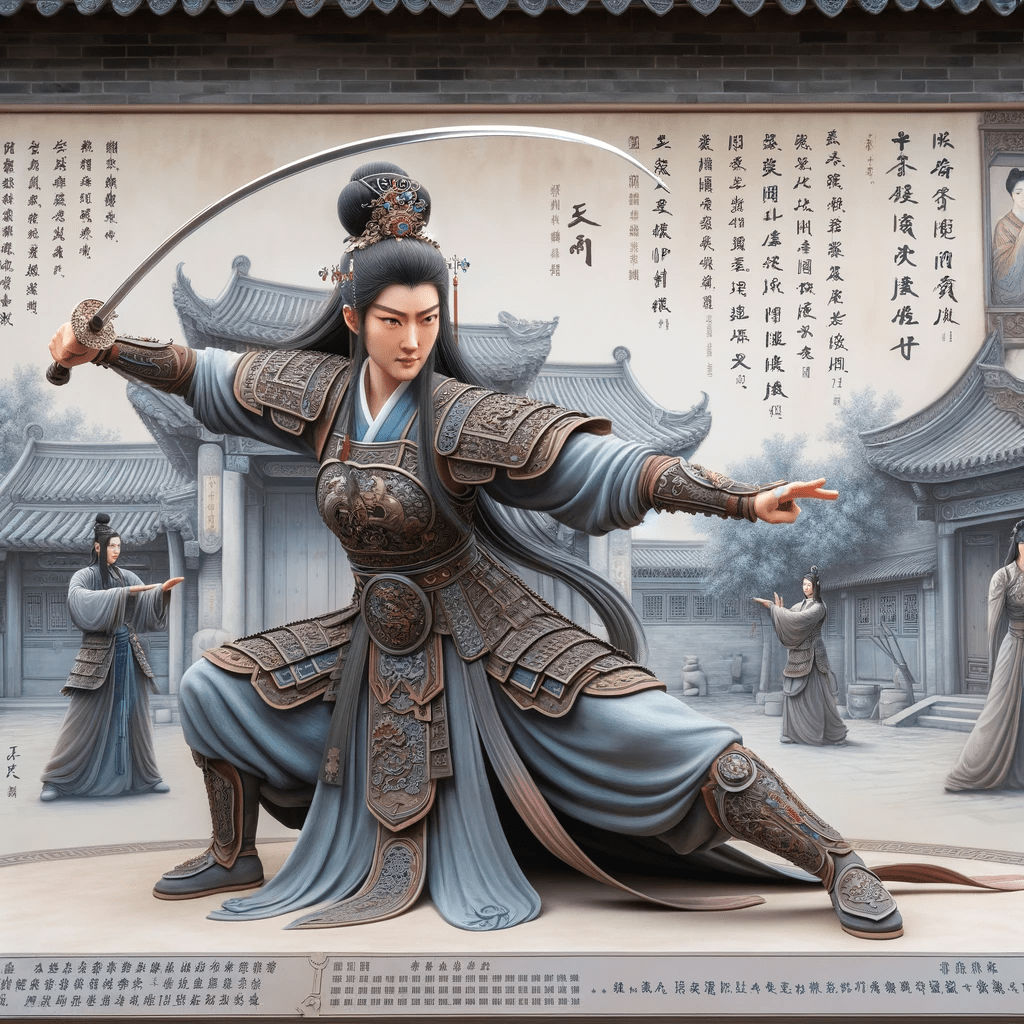
    Yuenü’s mastery of the sword is deeply rooted in the traditional techniques of Chinese swordsmanship, emphasizing precision, speed, and control. Her expertise lies in the seamless synchronization of martial arts movements with swordplay, executing swift and graceful strikes with unparalleled finesse. This fusion of combat disciplines is emblematic of her character’s portrayal in Jin Yong’s writings, where the artistry and elegance of her sword techniques are vividly depicted.

    Yuenü’s proficiency with the sword carries immense cultural significance, representing the embodiment of honor, loyalty, and courage in the realm of swordsmanship. Her prowess exemplifies the revered status of the sword as a symbol of power and chivalry in Chinese history and literature, resonating with the time-honored tradition of swordplay as an integral part of Chinese heritage.

    Noble Phantasms of Yuenü

    The Noble Phantasms of Yuenü, also known as Lady Yue, encompass the legendary Yuè Wáng Gōu Jiàn and the enigmatic Jiutian Xuannü, both of which have been immortalized within the narratives of Jin Yong, the Ming Pao, and the rich tapestry of Chinese mythology and folklore.

    Yuè Wáng Gōu Jiàn, the legendary sword wielded by Yuenü, holds a significant place in Chinese lore and literature. Its portrayal in Jin Yong’s narratives adds to its mystique, as it is imbued with the power to conquer nations and guide destinies.

    On the other hand, Jiutian Xuannü, the mystical being associated with the art of war, is deeply intertwined with Chinese mythology, nurturing a rich connection with the spiritual and supernatural realms as depicted in the Ming Pao and other literary works.

    Yuè Wáng Gōu Jiàn

    The Noble Phantasm of Yuenü, known as Yuè Wáng Gōu Jiàn, is intricately linked to the legacy of King Goujian, symbolizing the mastery of the sword within the realm of Chinese martial arts and resonating deeply within the realms of mythology and folklore.

    King Goujian, the resolute monarch of the Kingdom of Yue during the Spring and Autumn Period, epitomized by the tale of his endurance and eventual triumph over his enemies, serves as the foundational inspiration for this legendary weapon.

    With its origins deeply rooted in history, Yuè Wáng Gōu Jiàn is not merely a physical instrument but a symbol of resilience, magnanimity, and ultimate victory in the face of adversity, echoing the values esteemed within Chinese martial arts traditions.

    The significance of this Noble Phantasm extends beyond its tangible presence, intertwined with the rich tapestry of mythological narratives and folkloric lore, further enhancing its mythical allure and enigmatic aura.

    Jiutian Xuannü

    Jiutian Xuannü, the enigmatic Noble Phantasm of Yuenü, also known as Lady Yue, embodies the essence of mystical prowess, steeped in the rich tapestry of Chinese mythology and folklore, as immortalized within the narratives of Jin Yong and the Ming Pao.

    According to legends, Jiutian Xuannü is believed to possess unparalleled wisdom and extraordinary powers, representing the celestial alignment of the Nine Heavens. This mystical artifact is deeply intertwined with the concept of cosmic harmony and the celestial hierarchy within Chinese cosmology, as portrayed in various ancient texts and literary works.

    The depiction of Jiutian Xuannü in Jin Yong’s narratives and the Ming Pao further emphasizes its significance, unveiling the profound influence it exerts within the intricate tapestry of Chinese folklore and mythology.

    Quotes by Yuenü

    The enduring quotes attributed to Yuenü, also known as Lady Yue, resonate throughout the annals of ancient China, carrying echoes of mythology and folklore that encapsulate the essence of her legend.

    Yuenü’s wisdom and timeless words have transcended centuries, enriching the cultural tapestry of China. Legend has it that she was an exemplar of virtue, revered for her unwavering spirit and inner strength.

    Her quotes, often laced with profound insights and moral guidance, have been the subject of admiration and contemplation for generations.

    Today, her legacy continues to inspire, instilling timeless values that hold relevance in contemporary society.

    Adaptations and Cultural References

    The adaptations and cultural references associated with Yuenü, also referred to as Lady Yue, traverse the realms of mythology, folklore, and historical narratives, permeating through diverse cultural landscapes such as Hong Kong, the Eastern Han Dynasty, the legacy of the Han jian, and the rich tapestry of Chinese literature, including references to figures like Xishi.

    Yuenü, a central figure in Chinese mythology, is renowned for her deep connection to the tragic romance between her and her husband Lord Liang, with their story often being linked to the Eastern Han Dynasty’s complex political landscape. The tale of Yuenü, with its enduring presence in literature and art, has become an integral part of Chinese cultural heritage.

    Yuenü’s influence extends to Hong Kong, where her story has inspired various artistic representations, from traditional operas to modern adaptations in films and literature. Such adaptations continue to captivate audiences, providing a unique lens to explore the complexities of love, sacrifice, and loyalty.

    The enduring legacy of the Han jian, renowned female spies, echoes the resilience and courage embodied by Yuenü, contributing to a rich tapestry of historical narratives and cultural symbolism. The profound impact of Yuenü’s story resonates through the realms of Chinese literature, reflecting on themes of love, honor, and sacrifice.

    Characters in Adaptations

    The characters in adaptations of Yuenü, also referred to as Lady Yue, encompass a diverse ensemble, featuring figures such as King Fuchai, Yuejue Shu, Yuejue, and a myriad of personalities resonating within the realms of Wu Yue, mythology, and folklore.

    These characters play pivotal roles in various adaptations, each contributing to the rich tapestry of the Yuenü mythos.

    The enigmatic presence of King Fuchai, the powerful ruler of the ancient Wu Yue kingdom, adds a regal and authoritative dimension to the narratives.

    Contrastingly, Yuejue Shu emerges as a symbol of loyalty and honor, embodying the unwavering spirit of righteousness. The character of Yuejue elicits profound emotions, portraying the complexities of love and sacrifice in the context of historical and mythological realms.

    Within the rich tapestry of Wu Yue, various other intriguing personalities weave their stories, contributing to the captivating allure of folklore and mythology. Their interactions, conflicts, and allegiances unveil the essence of the human experience, making each adaptation a compelling exploration of the human spirit.

    Trivia and Translation

    The trivia and translation nuances associated with Yuenü, also known as Lady Yue, delve into the intricate details of her connections with figures like Aqing, Fan Li, and Xi Shi, along with the enigmatic presence of the white ape, all reverberating within the realms of historical figures, folklore, and the narratives of Jin Yong novels.

    Yuenü holds a significant place in Chinese history and folklore, her story intertwining with the legendary figures of ancient China. Aqing, who was infatuated with her, played a crucial role in the stories surrounding her life. Fan Li, a historical figure, is often associated with Yuenü due to their shared narratives in various tales and historical records. Her connection with Xi Shi, known for her beauty, expands the depth of her influence within the cultural imagination of China.

    One cannot overlook the enigmatic presence of the white ape, a mysterious and captivating element within the stories involving Yuenü. It serves as a symbol, representing various aspects of her character and the challenges she faced throughout her life. The portrayal of Yuenü in Jin Yong novels further adds layers of complexity and intrigue to her enduring legacy, showcasing how her compelling story has transcended time and captivated audiences across generations.

  • Jhalkari Bai A Remarkable Historical Figure

    Jhalkari Bai A Remarkable Historical Figure

    Jhalkari Bai, an extraordinary figure often overlooked in the annals of Indian history, deserves recognition for her invaluable contributions to the country’s freedom struggle. Despite being relatively unknown to many, her story is one of unwavering courage, selflessness, and determination. This article aims to shed light on the remarkable life and legacy of Jhalkari Bai, highlighting her pivotal role in the fight against colonial oppression. From her early years to her pivotal role in the Indian Rebellion of 1857, readers will gain a profound understanding of this remarkable historical figure and her enduring impact on India’s journey to independence. Join us as we delve into the remarkable and inspiring story of Jhalkari Bai, a true hero of India’s history.

    Introduction to Jhalkari Bai

    Jhalkari Bai, a prominent figure in the history of Indian independence, was a brave warrior from the Koli community, hailing from the region of Bundelkhand in Jhansi.

    Known for her fearlessness and unwavering dedication to the cause of freedom, Jhalkari Bai played a vital role in the Indian Rebellion of 1857. She fearlessly adopted the identity of Rani Laxmi Bai, the queen of Jhansi, and led an all-female army, displaying exceptional courage and strategic acumen. Her legacy remains a source of inspiration, particularly for the Dalit communities, as she defied societal norms and rose to prominence through her sheer determination and exceptional military prowess.

    Early Life and Sociopolitical Environment

    Jhalkari Bai’s early life was intertwined with the sociopolitical landscape of Bundelkhand, where the influence of folklore and the resilience of the Koli community shaped her formative years amidst the burgeoning rebellion against oppressive forces.

    Role in the Rebellion of 1857

    Jhalkari Bai played a pivotal role in the Rebellion of 1857, standing as a courageous warrior and soldier alongside the iconic Queen Laxmi Bai, confronting the British forces led by Hugh Rose.

    Her involvement went beyond mere combat; she also worked closely with Queen Laxmi Bai, managing crucial strategies and aiding in troop organization. Jhalkari Bai’s remarkable bravery and quick thinking enabled her to lead the warrior women in various skirmishes against the British, showcasing exceptional military prowess.

    One of her notable actions involved disguising herself as the Queen during an attack, diverting the attention of the British forces and allowing the real Queen Laxmi Bai to escape unharmed, solidifying her reputation as an exceptional tactician. This act of valor earned her the respect and admiration of her fellow fighters and the Queen herself, solidifying her place in history.

    Bravery and Martyrdom

    Jhalkari Bai’s bravery and martyrdom in the face of adversity have immortalized her as a hero, known for her heroic deeds and unwavering spirit in the resistance against the British Army.

    As a woman born into a humble family in the region of Bhojla in the early 19th century, Jhalkari faced numerous challenges from a young age. Her courage was evident in her decision to disguise herself as the legendary queen, Rani Laxmi Bai, thus managing to protect her from the advancing British forces. She fought valiantly, leading a group of women warriors, and her strategic prowess on the battlefield has been the subject of many tales and legends.

    Commemoration and Cultural Legacy

    The commemorations and cultural legacy of Jhalkari Bai are woven into the fabric of oral narratives, folklore, and heritage, ensuring the preservation of her unsung legend and the recognition of her monumental contributions.

    She has been immortalized through stories passed down through generations, where her bravery, loyalty, and dedication stand as a testament to her enduring cultural significance. Jhalkari Bai holds a revered place in the hearts of many, inspiring countless individuals with her unwavering courage and resilience.

    Her portrayal in folk songs and local performances further cements her status as a revered figure, solidifying her legacy.

    Impact on Dalit History and Societal Importance