Blog

  • The Meaning Behind Judo Belt Colors

    The Meaning Behind Judo Belt Colors

    judo’s belt color system is an integral component of its practice and progression, reflecting an individual’s skill and dedication to martial arts excellence. Beyond technical proficiency development, each belt color represents core values such as humility, perseverance and discipline – from white belt’s blank canvas of potential all the way up to black belt’s embodiment of mastery – each has their own significance on this journey towards martial arts excellence.

    Jigoro Kano is widely recognized for pioneering the judo belt system and for good reason. As its creator, this color-based ranking system helps his students gauge their progress while learning techniques and skills related to judo. Not only is this an indicator of experience; but its visual display also keeps students on target with their goals while encouraging ongoing training sessions.

    Although Jigoro Kano pioneered the colored belt system, many martial arts instructors have contributed to its evolution and application. One such instructor was Mikinosuke Kawaishi who introduced judo colored belts in Europe during 1935 after teaching in England; using them was to increase appeal of his art more readily accessible for Europeans – marking one of the earliest instances of belt-based ranking systems used across Europe.

    Though judo belts vary by color and material, their basic principles remain constant across martial arts federations organizations. For instance, durable yet breathable fabrics should be used to provide comfort during training. Furthermore, well-fitted belts allow free movement while donning/doffing is easy. Furthermore, different sized belts must accommodate for different practitioners based on gender or size requirements.

    Selecting an ideal judo belt color can be daunting, but with research and an understanding of their meanings you can select one to meet your individual needs and martial arts goals. Keep in mind that requirements vary by martial arts federation/country so be sure to read up on regulations before making a purchase decision.

    White belts represent the first step on any journey; open minds and willingness to learn are characteristics of success for any student starting a martial art journey. Yellow belts symbolize growth and transition into intermediate level skills while green belts represent continued commitment and maturation of skills within judo – much like grass turning green with age – signifying knowledge acquisition and technique refinement.

    Purple belt represents a student’s dedication and desire to learn, as well as their desire for improvement in Judo. At this stage, students begin developing their own styles and becoming increasingly independent; brown belt is indicative of being able to see the big picture and understanding cooperation is an integral aspect of both practice and life in general.

  • What Does No Contest Mean in MMA?

    What Does No Contest Mean in MMA?

    Though many assume MMA fights end via knockout or submission, there are other means for an action to be stopped in an MMA bout – no contests – which affect each fighter’s record.

    No contests occur when a fighter is injured due to an accidental illegal strike; such strikes could include those made against their groin, behind their head or near their eye.

    A fight that is declared a no contest

    An official no contest ruling occurs when neither fighter is able to claim victory. This could happen for various reasons, including an illegal strike which causes injury; when this occurs, the victor is determined by either referee, doctor, or the fighter’s corner.

    A no contest decision may be reached when an unintentional unlawful strike (regulated differently depending on the organization) leaves an opponent unable to continue, such as through submission or knockout.

    However, not all injuries can be easily classified as intentional fouls; an example is Ross Houston and Nicolas Dalby’s fight that ended up as a no contest due to Austen Lane accidentally poking his eye out and inadvertently poking Ross Houston in the eyeball. Luckily for bettors, such instances only happen rarely and all bets are usually returned unless it back a fighter who later fails his or her drug tests.

    A fight that is declared a draw

    When discussing mixed martial arts (MMA) fights, most people think of the usual ways that an encounter may end: knockout, submission or decision. However, no contest is also an option that may arise due to circumstances beyond either fighter’s control, such as illegal strikes.

    Accidental illegal strikes could include anything from kicking an incapacitated opponent to an accidental eye poke or low blow. An external intervention such as a fan disrupting a fight may also constitute an accidental illegal strike.

    Fights may also be declared no contest if a fighter fails a drug test, in which case his win would be overturned to no-contest and they would face heavy fines and suspension; additionally they won’t receive winning bonuses – although such situations have occurred previously.

    A fight that is declared a forfeit

    MMA is an inherently violent sport, and sometimes fights can end unexpectedly. Recently, two fighters exchanged knockout punches that caused an unexpected no contest outcome that shocked fans. This decision left many of them scratching their heads wondering what could have caused such an outcome.

    No-contest rulings may arise for various reasons and differ from draws and technical decision wins in that they refer to when a fight ends for reasons beyond any individual fighter’s control, such as an accidental eye poke that forces someone out.

    Other causes for no-contest rulings could include failure of a fighter to meet minimum requirements or fail a drug test, usually leading to forfeiture of prize money and record damage for them; there have also been instances when no contest results were overturned due to evidence of fixed fights.

    A fight that is declared a technical decision

    Technical decisions in fights occur when it is impossible to ascertain who the winner was after the last round has ended for various reasons, such as accidental illegal strikes or injuries that render one fighter incapable of continuing fighting. A fight may also be declared no contest if one fighter used prohibited substances during the bout.

    No-contest results can be devastatingly shocking to fans and fighters, and thus should be avoided whenever possible. Although not as severe as knockout or submission results, a no-contest result still has the power to destroy one’s reputation with fans as well as those backing fighters; furthermore, bets will only ever settle upon official results announced after each fight has concluded and subsequent appeals or amendments do not affect settlement in any way. It is crucial for bettors to carefully read MMA rules and understand that bets will settle on official results announced at the conclusion of each fight instead of changing settlement on potential appeals or amendments by players and supporters that bettors support fighters during fights as these don’t affect settlement.

  • Computer and Text Neck Stretching Exercises

    Computer and Text Neck Stretching Exercises

    Neck stiffness and pain may be caused by any number of factors, including poor posture or sitting for too long periods of time. Computer or text neck is also common.

    To avoid these issues, it’s important to stretch regularly and take breaks from looking at devices. Here are four neck stretching exercises which may help alleviate and prevent future pain from returning.

    Stretching the Front of the Neck

    Staring down at your phone and computer for long hours each day can put undue strain on your neck, known as tech or text neck, which compresses neck muscles and nerves leading to pain and stiffness in your muscles and nerves.

    To reduce this problem, practice some simple neck stretches. Do these exercises at work or home to alleviate neck pain and improve posture.

    Beginning by sitting or standing with a straight spine and your chin parallel to the floor (as if trying to form a double chin). Slowly lower your head as you squeeze shoulder blades together until they pull downward, stretching 2-3 times each week in this way to strengthen muscles in your upper back and neck area. In addition, use the prone scaption stretch for maximum benefit when strengthening trapezius muscle at base of neck through shoulders to middle back region.

    Stretching the Back of the Neck

    Since neck pain from staring down at electronic gadgets for too long has become so widespread, NewYork-Presbyterian Hospital has coined it “tech neck.” This condition results from constantly tilting one’s head downward while staring down at devices, leading to stiffness, soreness and other health problems according to NewYork-Presbyterian Hospital.

    To prevent neck pain, it’s essential to take several simple precautions. These could include improving workstation ergonomics and scheduling frequent breaks at work; employing specific neck stretches; as well as taking breaks regularly from workstation workstation.

    One of the best ways to stretch out the back of the neck is with the Scalene Exercise. To do this, stand upright with hands below collar bone and slowly tilt neck back toward ground until feeling stretch in back of neck. Repeat this exercise throughout your day – more frequent performances will increase support from neck muscles for head and shoulders.

    Stretching the Shoulders

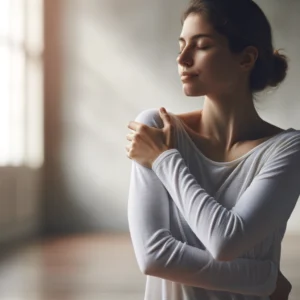
    Stretching shoulder muscles is vital in alleviating tech neck. To do so, interlace your fingers and gently pull one shoulder towards the opposite side until a light stretch appears in your chest area. Repeat on both sides until reaching an ideal stretch position – then hold for 30 seconds on both sides before continuing your activities.

    shoulder stretch

    This neck exercise targets the levator scapulae muscle found at the back of your neck and shoulder blades, stretching it in order to relieve tightness caused by improper posture that leads to neck pain or headaches.

    This stretch may appear strange to your colleagues when you practice it at your desk, but its benefits cannot be understated. Stretching the scapulae muscle helps with posture and flexibility while improving range of motion in both the neck and shoulders – two great alternatives to shoulder shrugs which both increase range of motion in neck and shoulders! Regular practice of this stretching method at work or home should help avoid tech neck in the future.

    Stretching the Arms

    Resisting the temptation of spending too much time on our phones and computers is difficult for many of us, yet to avoid tech neck it’s essential that we follow some basic ergonomic tips such as maintaining good posture, taking regular breaks, stretching out those neck and shoulder muscles as well as strengthening them with exercises such as yoga.

    One of the best exercises for relieving neck pain is the corner stretch. This exercise works to loosen pectoral muscles (the group of muscle tissue over your chest). As these can often become tight if we have poor posture, doing this stretch can help alleviate neck discomfort.

    This stretch can be performed sitting or standing, in either case your shoulders should be pulled back as far as possible without strain. Repeat several times throughout the day for 20-30 seconds each time; it will help relieve stiff, sore, and tense muscles.

  • How Old Is Kung Fu?

    How Old Is Kung Fu?

    Kung fu is an ancient Chinese martial art which encompasses numerous techniques, philosophies and physical exercises that require dedication and discipline for self-defense purposes.

    Boxing has long been an integral part of Chinese culture. It has gained widespread recognition across Western culture through Hollywood films.

    Qin Dynasty

    Kung fu is an umbrella term covering many martial arts styles with an intriguing history. We will investigate its roots, various styles and underlying philosophy in this blog post.

    Early forms of Kung Fu were first developed as a response to prehistoric Chinese ancestors living in harsh environments. To survive in such circumstances, they needed basic defense and attack techniques like leaping, tumbling, and kicking as well as crude stone or wood weapons for defense and attack.

    As mentioned above, these fighting skills first evolved during the Qin and Han Dynasties (221 BC to 220 AD). At that point they gradually developed into what we know today as Kung Fu; its practice includes wrestling, spearing and swordplay techniques that we recognize today. Shifu in Kung Fu Panda trained Master Rhino, Master Croc, and Master Ox before Tai Lung came into being; at that time they would have been 36-40 years old in flashback scenes shown.

    Qing Dynasty

    The Qing Dynasty, also known as the Manchu Dynasty or Qing China, was founded in 1636 in Manchuria by Tungusic people and ruled China from Beijing until it fell during the Xinhai Revolution of 1912. Under its rule were large-scale territorial expansion and flourishing arts while Neo-Confucianism reigned supreme as its main philosophy.

    Kwai Chang Caine stars as Kwai in Kung Fu Panda 2; he’s an engaging shaolin monk who uses his abilities to aid others, while dodging bounty hunters. Kwai shows off his kung fu prowess through flashbacks of him defeating a dragon!

    Kung fu is an ancient Chinese style of martial arts with roots dating back centuries, drawing its inspiration from its emphasis on self-discipline and concentration as its core values. This philosophy often serves to explain kung fu techniques while inspiring many other styles worldwide – providing more than just an arena for physical fighting! Kung fu also provides ways to stay healthy and express oneself.

    Republic of China

    Kung fu is the Chinese martial art known for combining mind and body disciplines into one holistic experience, invoking fighting techniques with meditation practices to foster character development and increase discipline. Kung fu can even help prevent injury to both body and mind by being physically strenuous! It has even been claimed to help build character while cultivating self-discipline.

    Kung fu has its origins deep within China’s history, although it developed differently across its different provinces and cities. Some styles were inspired by Taoist teachings while others came out of Shaolin temple trainings; nevertheless, its development was mostly driven by hunting and defense needs in primitive societies.

    Ming Dynasty (1368-1644) brought with it an emphasis on combat techniques that has become an integral part of Chinese culture. Since then, Kung Fu has become popular around the world as a form of self-defense and exercise as well as sport and entertainment; nowadays there are hundreds of styles and techniques being practiced all across China that make up modern kung fu today.

    Shaolin Temple

    The Shaolin Temple (Chinese:; pinyin: Sho Ln Si) is one of China’s premier Buddhist monasteries and widely revered for its contributions to Kung Fu. Situated in Henan province’s Song Mountains, Bodhidharma founded it during the sixth century AD.

    This temple, recognized by UNESCO as a World Heritage Site, is considered the birthplace of Zen Buddhism. Monks at this temple use martial arts both spiritually and to maintain physical fitness; many styles developed there are now taught worldwide.

    By the mid-16th century, military experts from throughout Ming China were visiting Shaolin temple to learn its fighting techniques. Around this time Chueh Yuan reformed and modernised it by creating the Seventy-two Movements; which focused on both internal and external fitness training. He is considered the father of modern kung fu. Monks still teach this art today at Shaolin.

  • Dutch Style Kickboxing

    Dutch Style Kickboxing

    Dutch style kickboxing is an innovative combination of Muay Thai, Kyokushin, and western boxing techniques, characterized by nonstop forward pressure punctuated by punching combinations punctuated by low kicks.

    Dutch kickboxers train intensively to increase physical endurance and power. This includes conditioning exercises, sparring sessions, and circuit training.

    Focus is also placed on building a strong mental game, including staying calm under pressure and understanding that hard work pays off.

    Ramon Dekkers

    Dutch kickboxing

    Ramon Dekkers was an icon in Dutch kickboxing history. Starting as early as twelve years old with disciplines like judo and boxing before eventually discovering Muay Thai under Cor Hemmers (famous Dutch trainer and champion).

    Dekkers was known for his dynamic fighting style that combined speed and power. He often employed low kicks which caused serious injury to his opponents while using quick punches to open gaps in their defenses.

    He had incredible skill, often knocking out opponents with ease. One of his most famous matches was against Orono Por Muang Ubon who became his bitter opponent.

    Ramon Dekkers quickly rose through the ranks as an influential trainer at both Team Dekkers and Golden Glory after retiring from competition, serving as commentator at K-1 matches and also acting as trainer to several Dutch fighters such as Semmy Schilt and Remy Bonjasky. He is considered a mentor by fellow Dutch athletes such as Semmy Schilt and Remy Bonjasky.

    Semmy Schilt

    Schilt was one of the greatest heavyweight champions ever, dominating his opponents by employing both punching and kicking tactics against them. His long legs allowed him to create openings in their defense while his devastating low kicks often ended fights by knockout.

    Schilt’s success stems from hard work and dedication to the sport. He trained extensively, using sparring as an avenue to increase power and combinations while honing his skills and perfect his combinations. Some may consider sparring too dangerous, but when done safely it can serve as an invaluable means of improving technique while building mental resilience.

    Dutch style kickboxing differs from other combat sports in requiring high levels of physical fitness and endurance to perform successfully. Training includes partner drills and sparring sessions designed to develop timing, distancing, as well as an emphasis on high kicks for fighting purposes – Schilt’s last fight saw him defeat Badr Ghita with an early KO victory at K-1 World Grand Prix 2015.

    Nieky Holzken

    Nieky Holzken is one of the top Dutch kickboxers worldwide. His combination striking utilizes elements of Kyokushin Karate, Western Boxing and Muay Thai in order to penetrate opponents’ defenses and deliver explosive finishes – something for which he has won multiple MMA and K-1 championships, garnering him worldwide respect and accolades.

    He employs an innovative stance that allows him to move with maximum mobility when attacking, as well as impeccable timing and precision. Drills were used to perfect combinations and footwork; additionally, sparring was done regularly to hone skills and prepare for real combat.

    At ONE Super Series’ WARRIOR’S DREAM event, he made an unforgettable debut, stunning Cosmo Alexandre with an uncompromising knockout victory that featured big strikes, kicks, knees and fluid combinations of punches, kicks, knees and elbows. Regian Eersel will then face him once again at ONE Fight Night 11; the victor of which will earn an opportunity to challenge for the ONE Lightweight Kickboxing World Championship title.

    Dutch kickboxing champions

    Dutch kickboxing is an innovative style of kickboxing which has produced some of the world’s greatest fighters. These champions embrace its philosophy of taking personal responsibility for one’s own success and developing their own strategy, while emphasizing hard work and perseverance as key factors to their success.

    Jan Plas, a Kyokushin karate instructor who trained the likes of Peter Aerts and Rob Kaman at Mejiro Gym in Amsterdam was one of the pioneers of Dutch kickboxing. His students would go on to dominate both K-1 and Glory world series under his instruction.

    Semmy Schilt and Alistair Overeem are among the more well-known Dutch champions. Both are known for their precise footwork and devastating low kicks; as well as using clinch fighting to create openings in their opponent’s defense. Through their success, Dutch kickboxing has become one of the world’s premier martial arts disciplines and one of the most effective striking systems available today.

  • Buffalo Hump Removal Exercises

    Buffalo Hump Removal Exercises

    A neck hump or buffalo hump may be caused by poor posture, hormonal imbalances and certain medical conditions; fortunately it is reversible through targeted exercises.

    Here are five easy Buffalo Hump Removal exercises that will help improve your neck and back posture, strengthening and stretching other parts of the body that need strengthening or flexibility work.

    Double Chin Exercise

    Diet and weight management remain key ways to diminishing double chins; however, regular facial and neck exercises may also help tone and contour the jaw area. These simple yet straightforward exercises can diminish fat accumulation while improving posture and shaping the jawline for a more defined jawline.

    Begin by standing or sitting upright, with your back straight. Gradually rotate your head from right to left to stretch your neck muscles. Do this daily.

    An effective neck exercise is to tilt back your head and gaze upward. While this exercise might initially prove challenging to complete, regular practice is necessary in order to strengthen chin muscles and decrease any appearance of double chins.

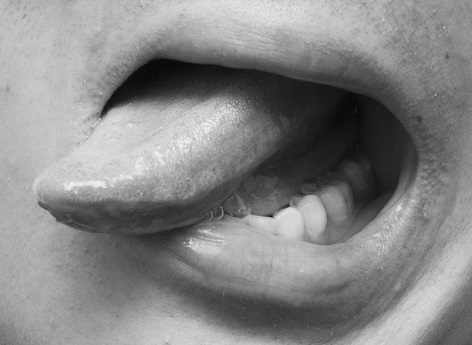
    Extending and switching your tongue side-to-side is another excellent exercise to tone the chin and jawline, providing visible results more quickly. Do this exercise before a mirror for maximum impact!

    Upper Back Stretch

    Known as a buffalo hump, neck humps result from fat accumulation at the base of your neck due to hereditary factors or medical conditions (or even using steroids), or even through using steroids themselves. Although untreatable in most cases, they are treatable with exercise alone.

    Ethan Cleary of Orthopedic & Sports Physical Therapy suggests doing shoulder blade squeezes as part of an exercise regimen to improve posture and reduce the appearance of a hump. To perform this exercise, sit up straight and draw together both shoulder blades as though pinching a pencil between them before holding for several seconds and repeating several times.

    Exercise for upper back and neck health. Yoga or stretching exercises may also help, which will improve rotation of spine – another contributing factor of neck hump formation.

    Shoulder Stretch

    A buffalo hump is a bulge of extra fat under your neck that makes you appear older than you really are. It may be caused by weight gain, hereditary factors or medication and in rare instances may even cause discomfort such as numbness and pain.

    To reduce a bump, exercises which strengthen posture and muscles may help. A non-invasive treatment called Precision Sculpt may also remove any extra fat without surgery.

    Begin your warm up session by warming up your muscles with dynamic stretching – moving the muscle through its full range of motion without holding it still – to increase flexibility and decrease stiffness. This is proven effective.

    Assemble near a doorway or wall and place your right hand on the edge of the door frame slightly below shoulder level with palm facing forward, palm down. Slowly turn left keeping arms down and back until a stretch in your chest and shoulder appears; hold this stretch for 30-60 seconds.

    Neck Stretch

    Fatty deposits behind the neck may reduce movement in both the upper back and thoracic spine, as well as irritating nerves in that area causing pain or even numbness.

    To ease tightness and tension that commonly appears here, try this simple exercise:

    Simply stand up with arms at your sides, slowly turn your head right until a stretch in your neck can be felt, hold for 20 seconds and return back to starting position. This exercise can help relieve neck and shoulder pain caused by poor posture or digital device usage, helping relieve neck strain.

    This exercise targets the levator scapulae muscles (the group that helps you move your shoulder blades). It is easy to perform and may help relieve neck and back pain as well as improving neck and shoulder alignment – perfect for anyone suffering from buffalo hump!

  • Best Running Shoes For Overweight Women

    Best Running Shoes For Overweight Women

    As an overweight runner, you require running shoes that can support and cushion your body weight safely while also offering sufficient comfort during a run.

    Running shoes are essential to runners of all sizes. Selecting the appropriate pair can make all the difference to both comfort and performance on the track.

    HOKA ONE ONE Glyceryn

    The Glycerin from Brooks is an ultra soft shoe designed for maximum comfort on every run, while also being durable enough to withstand long distance runs without fatigue. A favorite among runners of all distances and colors, its DNA Loft midsole has become even softer and lighter in recent years, making this shoe suitable for longer runs as well as middle distance runs.

    The Brooks Glycerin 19 is designed for everyday running, recovery runs and most types of training. With solid cushioning that’s great for heavier feet and an easily-carpeted sole, it provides solid comfort even on longer runs and recovery sessions. Not the lightest running shoe but still lighter than Nike 1080v8 with a wider toe box and easy on feet feel; plus its new upper is more accommodating with excellent arch support and heel cup placement – plus it feels like wearing slippers!

    Brooks Ariel

    The Brooks Ariel is an excellent option for runners with maximum support needs who require cushioned cushioning combined with extra stability from its wide base and generous fit, ideal for orthotics. Furthermore, this shoe utilizes GuideRails along the medial and lateral sides to offer holistic support that complements natural movement paths while restricting excess motion.

    These shoes are exceptionally soft, featuring nitrogen-infused DNA LOFT v3 technology to accommodate for each individual stride and absorb shock upon impact while still offering a comfortable experience.

    These running shoes for overweight women offer unparalleled support, earning the American Podiatric Medical Association (AMPA) seal of approval. With their spacious toe box that allows your feet to splay naturally when running or walking, these are an ideal way to spread weight evenly across feet while remaining supportive and comfortable.

    ASICS Gel-Kayano 26

    The Kayano 26 is an exceptional stability shoe designed to accommodate mild-to-moderate overpronators who cover long miles. Redesigned GEL and DUOMAX technologies enhance ride quality while its sturdy external heel counter works to counter overpronation forces.

    The upper of these shoes features engineered jacquard mesh and supportive overlays to keep feet safe on long runs, and plenty of room for forefoot swelling during extended sessions.

    Underfoot, the Kayano 26 retains its signature “GEL” design with a visible Gel window at the heel and an additional layer of FlyteFoam Propel foam in the forefoot – both featuring rubberised foam components to keep them from compressing too quickly.

    Dura Sponge technology improves energy return at toe off and adds to its durability, while in the rearfoot a Guidance Trusstic system stabilizes without compromising flexibility – perfect for overweight runners looking for an enjoyable long distance running experience. The Kayano 26 offers comfortable long distance running experience.

    Altra Paradigm

    The Altra Paradigm is a max cushion stability shoe featuring a wide toebox and zero drop, perfect for overweight runners looking for a more natural running experience. Using innovative Guide Rail technology, its Guide Rail technology provides stability where needed by creating an inherently stable experience – even on uneven surfaces!

    Matt: This latest version of Altra Paradigm boasts a smaller footprint and lighter feel, featuring INNERFLEX technology to let the foot flex naturally rather than where a shoe tries to force it. This creates a more natural midfoot strike which helps prevent injuries.

    Samantha recently discovered zero-drop shoes and has found them to be an ideal solution. They keep her feet comfortable throughout her working and public transportation commutes, but may become stiff at higher speeds when running faster distances.

  • Shotokan Karate Belt Order

    Shotokan Karate Belt Order

    Shotokan Karate features a progressive system of belt levels known as Kyus. Each belt level represents a student’s skill and dedication.

    Student ranks are determined primarily by performance in three main areas of karate: kihon (basic techniques), kata (predetermined combinations of techniques) and kumite (sparring). Other factors, including attendance, may also contribute to promotion.

    White

    Shotokan belt system serves as a visual indicator of Karate skills and encourages continued progression. It’s a transformative journey requiring discipline, dedication and a deep passion for this ancient art form.

    Gichin Funakoshi adopted Jigoro Kano’s kyu/dan ranking system for Karate training in 1922, beginning with white belts before earning other colors as they advance their studies.

    Yellow

    At this level, yellow belt represents the first rays of sunlight to open one’s mind to more martial art techniques. Students typically start learning basic blocks, strikes and kata in this stage.

    Gichin Funakoshi borrowed this concept from Jigoro Kano, founder of Judo. As World War II progressed and new methods of training emerged, darker belts became symbolic of progress and change.

    Orange

    Most people are familiar with martial arts belt rankings; these color-coded ranks, from white to black, represent various levels of skill and accomplishment in martial arts practice.

    Jigoro Kano, the creator of Judo, originally devised the belt ranking system that is still used today. Gichin Funakoshi adopted this ranking system when creating Shotokan Karate; believing that such an aid would aid students’ training and progress – an assertion which proved true over time. White represents the first rank.

    Green

    Shotokan Karate uses a color-based belt system to assess martial artists. Each color represents different levels of expertise; and three to five years of consistent training may be needed before reaching black belt status based on one’s dedication, practice time, and skill level.

    Students achieving green belt mastery gain more knowledge of martial arts, are adept at sparring and kata techniques and can apply new skills in different situations.

    Blue

    The blue belt symbolizes dawn, signifying growth for each student. To qualify for this level, one must satisfy certain requirements such as kata and sparring training.

    At this point, students are well on their way to attaining black belt status. Their attention should be focused on improving kihon, kata, and kumite performance while regularly attending all classes and training.

    Purple

    Purple represents the sky that begins to darken at dawn, as skills planted by yellow belt ranks start taking root and flourishing into full-fledged plants.

    At this grading you will be required to demonstrate two kihon ippon kumite techniques (basic one-step sparring exercises) from Jodan, Chudan and Mae geri as well as Yoko geri attacks from Jodan through Chudan as well as Mae geri. Additionally, Heian Yondan kata as well as Ukemi Waza break-fall techniques may also be performed at this grading.

    Brown

    Shotokan Karate utilizes a belt system that signifies an individual’s skill level. While there is a common belief that white belts become stained and turn black as students advance, in reality, their colors change gradually from light to dark as students advance their practice.

    At purple belt rank, students begin to put into practice what they have learned so far and begin to form strong fundamentals that have taken root and grown. An examiner at this stage will look for strong stances with correct techniques that display power and speed.

    Black

    Once you reach black belt status in Karate, it symbolizes your mastery of physical and mental martial arts techniques. Achieve this level can take years of hard work and dedication before reaching it.

    Gichin Funakoshi borrowed the kyu/dan grading system from Kano Jigoro, his Judo instructor. Many Shotokan clubs utilize this grading system today; there are also alternative grading systems which often follow similar principles.

  • WTF Taekwondo Vs ITF

    WTF Taekwondo Vs ITF

    WTF Taekwondo strives to preserve the original spirit of Taekwondo while emphasizing self-defense, while ITF offers more of a sport focus. Both groups share similar curricula with a colored belt system from white to black belts for instruction.

    Sparring in ITF involves light contact, while in WT it’s full contact. An accurate strike made against an appropriate legal target scores a point.

    What is Taekwondo?

    Taekwondo is a martial art that employs punching, kicking, jumping, throwing, and foot techniques to accomplish combative goals. Through practice of this martial art form, students develop confidence, discipline and perseverance that will serve them throughout their lives.

    Taekwondo competition typically consists of three two-minute rounds, with each round lasting two minutes, and the winner determined by whichever competitor earns more points during the match. Penalties, known as Gam-jeom, may be assessed for offenses like grabbing, holding or pushing an opponent while attacks against trunk protectors receive one point and powerful kick attacks on head receive five.

    Students also train in an atmosphere of unity, from their physical movements to mental training and life itself. Aiming for harmony between body and mind beyond the dojang and into society; practicing taekwondo serves as a way of life similar to having a job, raising children or fighting a cause.

    Why Taekwondo?

    Taekwondo is an effective martial art that can help develop self-defense skills, strengthen physical fitness and build character. Taekwondo practice also helps improve concentration, focus and discipline as it balances serotonin levels in the brain – something essential to overall health.

    Taekwondo training brings many advantages, and some of the more notable ones include:

    ATA is one of North America’s premier martial arts organizations with more than 1,500 schools throughout the US and was established by Grandmaster Haeng Ung Lee who had studied under General Choi at his Nebraska ashram. It began operations officially in 1969 under his supervision.

    ATA emphasizes a safer form of sparring by encouraging light contact and the use of blocking rather than attacking. Although injuring oneself during sparring is possible, proper safety equipment must always be worn such as head guards, mouth pieces, chest protectors and shin guards to minimize injuries during sparring sessions.

    What is the difference between WTF and ITF?

    Taekwondo has become one of the world’s most widely practiced martial arts disciplines, but there are numerous branches available for training. WTF and ITF are two popular ones. WTF specializes in competitive sparring events like Olympic Games; ITF features hand techniques with punches from hip. Furthermore, both styles emphasize proper footwork techniques.

    ITF training focuses more on real-life combat situations and features light contact sparring that utilizes open-handed strikes, elbow attacks, knee strikes to the lower body, hand techniques applied directly to head and body and ranged hand techniques that mimic martial arts (MMA) sparring structures with legal point areas ranging from facial areas all the way through front superior iliac spines.

    ITF systems feature many specialized forms to teach students to block, strike and evade from different positions.

    What is the best Taekwondo for me?

    Your answer depends heavily on your goals and preferences. WTF taekwondo focuses more on sport and competition, emphasizing high kicks and acrobatic moves designed to impress crowds and score points during matches than on real-life fighting situations. However, this style may prove less effective.

    ITF practices offer more traditional techniques and sparring methods that are tailored towards self-defense, including no-contact sparring and using various hand techniques in their routines. ITF practitioners frequently practice no-contact or point style sparring.

    Many schools across the world call themselves World Taekwondo Federation (WTF) schools, but what this actually indicates is membership in an National Governing Body (NGB) affiliated with WTF. This means they abide by its rules of competition and curriculum developed from Kukkiwon; however, most NGBs will recognize black belts from ITF schools for competitions under WTF regulations as well.

  • The Definition of Flexibility in Sport

    The Definition of Flexibility in Sport

    Many sports require athletes to move their joints through a wide range of motion. Without enough flexibility, athletes risk increasing the likelihood of injury.

    Flexibility refers to your muscles’ and joints’ ability to move through their full normal range of motion, helping promote proper body alignment, increase performance and decrease injury risk while decreasing muscle imbalance risk. It has many other advantages as well.

    Range of motion

    Physical fitness terminology refers to range of motion as the distance a joint or muscle can move. Although individual results can differ significantly, there are general standards regarding how far an area should move in each direction.

    An ideal range of motion is essential for athletic performance, enabling you to perform exercises with proper form and reducing injuries, as well as helping you reach optimal results from strength training workouts.

    But, when looking at pictures of elite athletes at work, they rarely demonstrate unusual levels of flexibility. Instead, they possess exceptional levels of strength, power, endurance, and balance; this is because most movements in sport occur within an acceptable range that most people can easily accomplish; exceptions occur when excessive fatty tissue or muscle mass impose limitations on a joint’s full range of movement, restricting flexibility and potentially leading to pain in certain joints.

    Muscle strength

    Muscular strength refers to the maximum force that one muscle or group of muscles can generate against resistance at one time. It’s an integral component of fitness and its influence can be felt across other variables like muscular endurance, speed and balance as well as day-to-day life functions such as being able to open doors and lift heavy boxes resulting in an active lifestyle.

    Important to keep in mind is that being strong does not equate to being powerful. Even though you might be capable of performing many squats at the gym, if your muscles do not contract quickly enough then power is missing from your game.

    Dynamic flexibility is required in sports that utilize full ranges of motion, such as gymnastics, diving and figure skating. Static-active flexibility requires using muscles to assume extended positions with assistance from another person while passive-passive flexibility enables extended stays in stretched positions.

    Coordination

    Coordination-minded athletes tend to excel at sports such as tennis, karate or football. This is because having flexible muscles and tendons that move the joints quickly results in faster movement without losing balance – saving energy thus enabling higher-level performances for longer.

    Coordination can be developed through regular exercises and drills. It’s especially vital in sports such as dance and racket sports that require the simultaneous stimulation of multiple muscle groups; such training also helps develop balance, rhythm and spatial awareness. Young athletes should be exposed to this form of stimulation from an early age so their coordination develops before becoming limited by sport specific stimuli later.

    Injury prevention

    Flexibility training is a vital element of fitness but is often neglected during athletic and sports performance training. A regular flexibility routine can improve joint mobility, posture and reduce injury risks.

    Although some individuals naturally possess greater flexibility than others, everyone can increase their own flexibility with regular stretching. Stretching can also help prevent injuries by relieving tight muscles and tendons during exercise and play that must be activated during movement.

    Flexibility is of utmost importance for athletes as it increases their range of motion and can enable faster running, jumping higher, twisting more freely, turning quicker, reaching farther etc. Athletes should strive for symmetry; being less flexible on one side than another increases risk for muscle strains; additionally a review of studies on injury prevention has determined that stretching alone does not prevent injury in sport or other activities.

  • Joe Rogan – BJJ Black Belt

    Joe Rogan – BJJ Black Belt

    Joe Rogan is an internationally acclaimed comedian, UFC commentator, and podcaster with one of the largest followings. Additionally he holds a black belt in Taekwondo as well as extensive experience in other forms of martial arts.

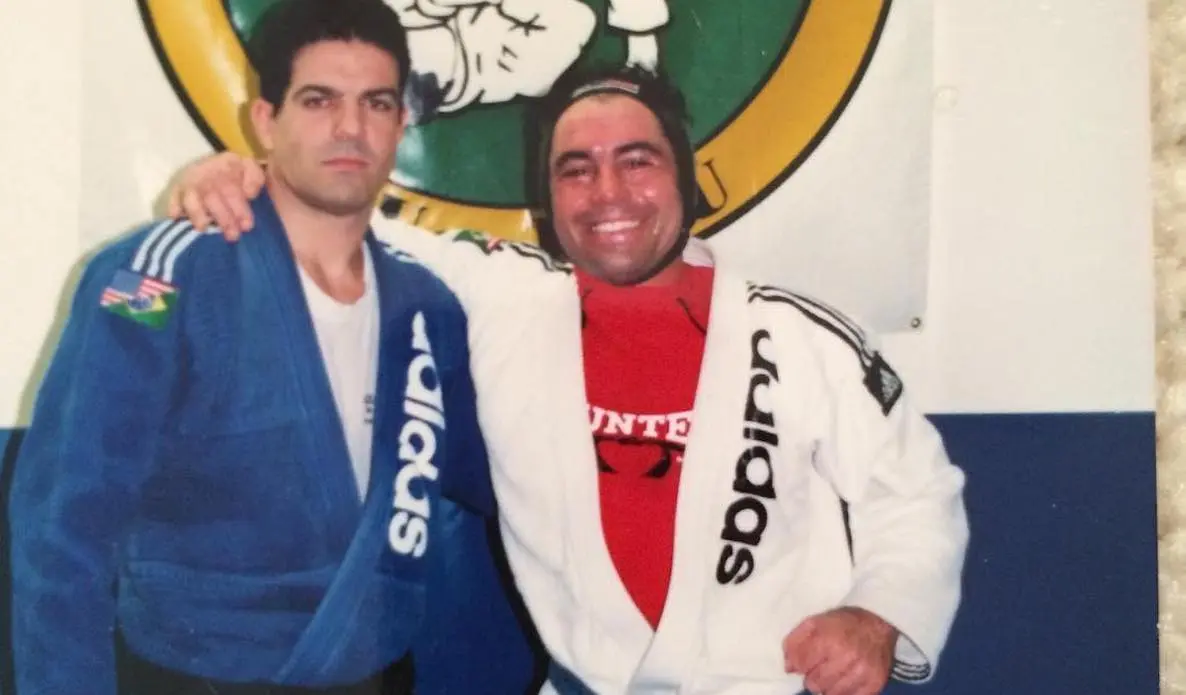
    Starting his martial arts training under Carlson Gracie and later Jean Jacques Machado in 1996, Eddie Bravo awarded him with his no-gi 10th Planet system and Machado awarded traditional jiu-jitsu black belts.

    The Story

    Joe Rogan has been training martial arts since he was a teenager and is an enthusiastic supporter of Brazilian Jiu Jitsu (BJJ). The UFC commentator boasts an in-depth knowledge of BJJ that often allows him to add specific details of moves used by fighters into his commentary.

    Joe began his martial arts journey by studying karate and wrestling before transitioning into Tae Kwon Do. After becoming Massachusetts full contact Tae Kwon Do champion for four consecutive years and competing in amateur kickboxing matches, he also has experience in Muay Thai – earning himself a black belt in this style as well.

    Joe Rogan earned both his gi and no-gi black belts from Jean Jacques Machado and Eddie Bravo respectively, and has trained under many of the biggest names in MMA and grappling such as Eddie, Jocko Willink, Brendan Schaub, Lex Fridman and Rickson Gracie.

    The Belt

    Joe Rogan is now a two-time black belt in Brazilian jiu jitsu, having received his initial instruction from Eddie Bravo and later from Jean Jacques Machado respectively. Rogan holds black belts both for gi and no-gi Brazilian jiu jitsu disciplines.

    Starting his martial arts journey in 1996, when he attended his first jiu jitsu class. Already an accomplished taekwondo competitor and amateur kickboxing participant at that point in time.

    Rogan is widely respected for his expertise as a commentator on UFC events, often providing technical analysis of grappling action. His close relations with some of the sport’s premier grapplers such as Royce Gracie, Eddie Bravo, Brendan Schaub and Jocko Willink has made him an influential force within their community.

    As well as being a respected commentator, Rogan is also an accomplished BJJ instructor with his own academy. He has trained alongside some of the greatest grapplers around and invited them on his podcast to teach his audience.

    The Techniques

    Joe Rogan is a champion of positional sparring and drilling. He trains both with a gi and no gi variations of BJJ; when not wearing one he prefers wearing the Fuji Fish Long Sleeve Sakana Rashguard when sparring without. Additionally he favors using Datsusara Hemp Jiu Jitsu Gi when donning one for tournaments or matches.

    He advocates BJJ as the optimal martial art for self-defense, believing it removes luck from combat so you always have a chance at avoiding injury.

    UFC commentator Joe started training martial arts at age 13, originally studying Tae Kwon Do. Ultimately he earned his black belt in this discipline which emphasizes punches and kicks; Joe is particularly famous for his devastating leg kicks. On his podcast Joe regularly hosts guest interviews with some of the world’s most notable grapplers and MMA stars to give them the chance to share their personal BJJ journeys with large audiences.

    The Results

    Rogan has become an influential advocate of martial arts as an entertainer, UFC commentator and former television show host. His podcast frequently hosts some of the top names in grappling and MMA who inspire many others to start training themselves.

    Joe Rogan holds two black belts in Brazilian Jiu-Jitsu (BJJ), earned from Jean Jacques Machado in traditional Brazilian Jiu-Jitsu and Eddie Bravo’s no-gi 10th Planet system respectively. Rogan believes jiu-jitsu to be the ideal martial art for self defense because it takes the fight down to the ground while eliminating luck from its equation.

    At his core is an exceptional top game and especially skilled at applying smothering top game techniques such as head and arm choke from closed guard and armbar from bottom half-guard. He enjoys using double underhooks to sweep his opponents with and force them into rubber guard stance. Jean Jacques Machado stands out among his students as one of the most talented and strong students he has ever taught with.

  • ATA Martial Arts Belt Order

    ATA Martial Arts Belt Order

    ATA offers an effective curriculum. Although not as widely practiced as Chang Hon or Kukkiwon TKD, its merits deserve serious consideration.

    Students also benefit from developing physical strength and martial arts skills while learning self-discipline, helping them to become leaders of society by inculcating a sense of respect for self.

    White Belt

    White belt students represent their commitment to training hard and furthering their art through forms, sparring, one-steps, self-defense weapons and leadership studies.

    Students who successfully pass a promotional rank test will receive stripes to indicate they earned their next rank. Stripes can be earned either on a “recommended” or “decided” rank level; reaching “decided” indicates you passed all areas of testing.

    Orange Belt

    At this level, students have mastered the fundamentals and can perform basic karate movements and initiate sparring sessions.

    Orange symbolizes the sun rising each morning and suggests increasing strength. At this belt level, students develop more advanced stances and techniques while becoming adept at reading their opponent’s movements.

    Students achieving this rank may compete, though it isn’t expected of them. They should exercise proper etiquette when training with teammates, and possess high self-discipline levels.

    Yellow Belt

    Students of the yellow belt rank have begun exploring ATA Taekwondo. Their camo belt represents growth and development akin to that seen with green sprouts.

    At this level, students also begin sparring, although no kicks below or above the belt are permitted.

    Yellow belt marks an essential step on the journey toward black belt. At this stage, students must continue working hard and remain committed.

    Green Belt

    The green belt represents the development and progress of students, signifying that they have reached an advanced level but are still working towards reaching the brown belt level.

    Students will begin sparring, which requires greater coordination, balance, power and execution of techniques as well as increased focus on Songahm Taekwondo fundamentals.

    Blue Belt

    The American Taekwondo Association’s (ATA) belt system indicates a student’s progress through martial arts training. There are 18 belt levels attainable within this system – 9 for each series.

    Students who earn a blue belt have proven they possess a firm foundation in Songahm Taekwondo, being proficient in basic techniques as well as physical conditioning, focus/concentration muscle memory sparring skills and board breaking capabilities.

    These students are now prepared to tackle more advanced forms and sparring combinations, as well as practice leadership skills.

    Purple Belt

    ATA utilizes a colored belt system to evaluate an individual’s progress as a martial artist. Each rank, or color, carries with it specific meaning and requires mastery in certain forms or Poomsae forms.

    Purple stands for the first “intermediate” belt level and symbolizes steep mountains students must climb with determination. Its In Wha 1 form contains 44 moves while sparring requirements have become more demanding – adding another level of difficulty and challenge for students at this belt level. Purple also signifies the sky, symbolizing heights they must strive towards.

    Brown Belt

    At this level, students begin to acquire basic adaptability to their environment and act fluidly – this process being fostered primarily through kumite (sparring).

    Students also develop both technique and power through rigorous training. Harmful or excessive power must always be balanced with wisdom and compassion if it is to be used responsibly. Students will be instructed on how best to use this resourceful force in an orderly fashion.

    Students enrolled at this level begin teaching classes and helping out in junior classes, in addition to attending tournaments.

    Black Belt

    Black Belt ranks are considered to be the ultimate achievement in martial arts training at ATA. Students aspiring to this rank must demonstrate an in-depth knowledge of Songahm Taekwondo and have satisfied all color belt requirements before attaining this status.

    Students should understand that success does not come easily and should work tirelessly towards reaching it through hard work and persistence. Their potential remains limitless if they remain committed to continuous improvement – those earning Black Belts receive a special presentation box for their new belt!

  • Tongue Stretching Benefits

    Tongue Stretching Benefits

    As yoga practitioners perform backbends to feel the open heart space or arm balances for power, your tongue can also benefit from regular exercises to strengthen and enlarge.

    Tongue stretching training has been demonstrated to increase tongue pressure, the area of the geniohyoid muscle and tongue protrusion during speech in healthy young adults. Furthermore, this exercise will reduce mouth tension and expand vocal range.

    1. Increased Range of Motion

    Tongue stretching exercises help increase the range of movement for your tongue muscle. They can be performed by protruding it out toward either side or up toward the roof of your mouth, flexing it in an O shape, curling around top and bottom teeth or repeating tongue twisters to stretch out its root.

    These exercises should be performed several times daily for optimal results, practicing until your tongue muscles feel slightly stretched out without experiencing pain.

    One study demonstrated that performing tongue stretching exercises for eight weeks increased maximum isometric pressure (MIP) measurements on both anterior and posterior tongue. Furthermore, this increase in strength was maintained over a 4-week detraining period, suggesting directional exercise training may be effective at increasing tongue strength for older adults with swallowing difficulties as well. Furthermore, high adherence was noted with this program.

    2. Increased Vocal Range

    Your current voice and muscle training could allow for increasing your vocal range by an octave or more, depending on how fast or hard you attempt it. Doing this, however, requires patience and could cause damage to the vocal cords if done too rapidly or excessively.

    Effective vocal range expansion exercises involve stretching exercises that increase airflow through your vocal folds while at the same time stretching them outward. Scale practice can help build this strength, but you should also employ other techniques to loosen up and train your voice so it moves more easily between higher and lower notes.

    One way of accomplishing this goal is through practicing high-range vowel exercises such as siren notes. Simply sing an “ooh” or “ee” note from low to high note and back again in order to create this siren sound. This exercise can especially benefit singers with heavier or chestier voices as it helps thin them as they ascend further in their range.

    3. Relieves Mouth Tension

    Stressful situations can cause the muscles in your mouth to tighten up, restricting vocal range. Stretching helps release this tension, freeing up more freedom for expression in voice.

    To stretch the tongue, extend it as far as possible and press against something flat (e.g. the back of a spoon or tongue depressor). There should not be any discomfort, just an enjoyable muscle stretch. Do this at least once daily – or more frequently for maximum results.

    Another simple tongue stretching exercise involves opening your mouth as wide as you can and pronouncing each vowel slowly and elongatedly. Repeat this exercise a few times each day to help strengthen throat and soft palate muscles. For additional resistance, place something between upper and lower teeth that provides resistance.

    4. Improves Breathing

    Many vocal issues, such as snoring and sleep apnea, result from tongue position during sleep that blocks airways. Tongue exercises help improve tongue positioning to ensure throat and upper airway stay open during restful slumber; one study showed how forcing back the back of tongue against teeth while raising the uvula could significantly decrease OSHA symptoms.

    To perform this exercise, position your tongue on the roof of your mouth just behind your front teeth, and gently move it back as far as possible until it touches both jawbones. Do this 10 times.

    Another tongue stretching exercise involves pushing your tongue outward to both sides, stretching not only its muscles but also engaging those of your neck and throat. This technique is often employed during voice therapy sessions for swallowing problems or as part of recovery from frenectomy surgery for tongue tie issues.

  • HIIT Workouts For Women Over 50

    HIIT Workouts For Women Over 50

    HIIT training is one of the fastest ways to increase fitness quickly, helping you lose weight quickly while toning and strengthening your body.

    HIIT workouts are gentle on joints and adaptable to any level of fitness – ideal for newcomers to fitness! Check out this 10-minute HIIT routine designed specifically for women over 50 to burn calories while strengthening all areas of their bodies.

    HIIT is High-Intensity Interval Training

    HIIT training, which incorporates short bursts of intense exercise followed by active rest periods, can be an excellent workout for women over 50 who are looking to burn fat, build strength and improve balance. Furthermore, this style can also help break through fitness plateaus as it shifts metabolism on a molecular level.

    At its core, true HIIT involves short work intervals – generally around 30 seconds – followed by rest periods that equal or surpass those for which you worked out. This helps prevent fatigue from setting in too quickly while simultaneously maximizing performance in each short work period.

    HIIT not only burns fat but can also increase muscle mass by reversing the aging process and strengthening them at a cellular level, as well as managing visceral fat which tends to increase during menopause. Furthermore, it improves insulin sensitivity and blood sugar levels reducing your risk for cardiovascular disease.

    HIIT is Short

    High-intensity interval training workouts involve switching between short bursts of intense exercise and longer recovery periods to work your entire body in short amount of time and burn more calories than exercising at a more traditional pace.

    Women over 50 will especially appreciate a low-impact HIIT workout like this because it doesn’t put too much strain on knees and joints. Plus, beginners can use this approach to learn moves slowly without pushing themselves too hard and risking injury.

    Before embarking on any fitness routine, particularly high-intensity workouts, be sure to consult with your physician first. Your goal should be challenging but not so tough that your muscles ache or breathing becomes labored – if this becomes impossible try cutting down the high intensity intervals until they feel manageable for you.

    HIIT is Fun

    HIIT workouts don’t require much equipment and can be completed from the convenience of your own home. However, for beginners it is recommended to start slowly and find an exercise partner who will support and motivate them through each workout session.

    At high intensity, your brain tells your body to release cortisol, which helps accelerate fat-burning while making muscles more sore than usual. But unfortunately, this also causes fatigued and soreness to set in as soon as you stop training at that intensity level.

    Add low-impact HIIT workouts like walking and cycling (outdoor uphill or on the treadmill) to your weekly schedule for maximum muscle soreness relief while protecting joints and ligaments from unnecessary trauma. Gradually increase interval lengths until you reach zone 5 intervals lasting 45 seconds with one minute recoveries – three times per week at least with two days dedicated to moderate exercise – until increasing frequency of workouts.

    HIIT is Effective

    Many women become discouraged when their regular workouts don’t produce results in terms of losing that extra ring around their waists. They try running, walking and even crazy workouts on YouTube that promise results; yet when they step on the scales there’s no noticeable change.

    As these intense workouts may exceed their current fitness level and cause injuries and discouragement, HIIT provides more versatility and can be tailored to each person’s unique needs.

    Menopausal women should begin with low-impact exercises such as cycling or body weight training and gradually build the intensity. Knowing your limits and not pushing too hard can also be key. Short work intervals followed by rest periods tend to work best as this allows your body time to recover before beginning again.

  • Functional Strength Training Vs HIIT

    Functional Strength Training Vs HIIT

    functional strength training vs HIIT

    Strength training vs cardio can often polarise gym-goers into opposing camps; however, an approach that includes both strength training and high intensity interval training (HIIT) could help you meet your fitness goals faster than anticipated.

    Functional strength training (FST) involves exercises that simulate real-life actions like squatting to pick up groceries or walking up stairs, and prioritizes full-body movements over traditional training methods.

    HIIT Burns Calories

    If you have taken part in any group fitness class in recent years, chances are good that you have engaged in high intensity interval training (HIIT). Simply put, HIIT involves brief periods of high intensity exercise followed by low intensity activity; typically 1 minute on high intensity for 2 minutes off intensity is popularly practiced.

    Short bursts of intense work require your body to use more oxygen, leading to faster caloric burn-off during and after workout – known as the afterburn effect.

    HIIT can be completed either using only bodyweight exercises, or combined with functional strength training using weights like kettlebells and barbells. Our DC Metro personal trainers can assist in choosing which form of training best meets your health and fitness goals.

    HIIT Strengthens Muscles

    HIIT works differently from traditional strength training in that it relies on functional movement patterns like lunges and push-ups that strengthen multiple muscle groups at once, providing benefits like improved balance, core strength, and endurance.

    To build muscle, your body must continually demand more from its muscles each time you exercise them. Unfortunately, high intensity interval training does not maximize mechanical tension and it is difficult to use enough weight quickly enough for hypertrophy (the necessary step).

    By working multiple muscle groups simultaneously in circuit fashion – such as kettlebell swings followed by pushups and pull-ups – you may achieve closer to your desired results. Just be sure to track your progress closely for maximum effectiveness!

    HIIT Increases Endurance

    Functional exercises are excellent ways of strengthening multiple muscle groups at once. This reduces stress and impact placed on any one area, thus decreasing injuries. Furthermore, functional exercises condition the body for everyday tasks that arise; just think how often someone hurts their back lifting heavy boxes or tweaks their knee while walking up stairs!

    As with traditional strength training, HIIT increases mitochondria density (the energy factories in a cell). This allows muscles to produce more ATP for higher intensities for longer. Furthermore, insulin sensitivity improves and blood sugar regulates, helping you burn more calories both during and post workout. Furthermore, HIIT may help prevent or reverse coronary artery disease by breaking down plaque in arteries and increasing blood flow.

    HIIT Strengthens Bones

    HIIT requires intense, short intervals of exercise followed by active recovery periods to maximize results. It can be performed at any level and typically lasts no more than an hour.

    Utilize a heart rate monitor to identify your optimal working heart rate (the result of subtracting your age from 221). In general, exercise sessions should occur at around 80-100% of maximum heart rate.

    Ashenden asserts that high intensity interval training (HIIT) workouts help strengthen bones by increasing bone density – an essential element of overall skeletal health and strength. Regular weighted resistance training increases bone strength but not to the same degree; HIIT may have greater advantages when it comes to functional strength as its movement patterns closely mirror our daily activities.

    HIIT Improves Mental Health

    Reaching fitness levels that enable you to perform daily activities is not only necessary for physical but also mental wellbeing. Functional training provides a solution, focusing on endurance and multi-directional movement exercises designed to prepare the body for common everyday movements.

    Traditional and functional training both help build bone density, which is critical for overall skeletal health and helps ensure an efficient metabolic rate that burns calories throughout the day. Furthermore, both types of exercise have also been proven to enhance mood while contributing to other habits that promote mental wellness such as getting enough restful sleep.

    Hiit workouts offer a convenient solution to those struggling to fit regular physical activity into their busy lives, as one study showed that just 30 minutes per week of HIIT can significantly improve sleep quality and decrease fatigue levels.

  • Best Running Shoes For Every One

    Best Running Shoes For Every One

    best running shoes for overweight women

    Every runner has their own distinct running style and it is essential to understand and select footwear that best meets it. Doing this will reduce impact and support body weight more comfortably.

    Many overweight runners struggle with overpronation, necessitating running shoes with additional shock absorption capabilities and sufficient arch support to prevent injury.

    HOKA ONE ONE Glyceryn

    Have you been searching for running shoes that provide easy on your legs and leisurely runs, like recreational running? Look no further than the Brooks Glycerins with the new DNA Loft V3 cushioning: these are both super comfortable and very durable.

    Soft cushioning and wide toe box fit make these trainers an excellent option for heavy runners looking for daily recovery runs or training to run sub ten minute miles. Their performance makes them direct competitors with most other high-end regular trainers from other brands.

    Heavier runners may find the DNA foam too soft and may experience it collapsing more quickly than lighter weight counterparts; however, this won’t be an issue as the overall feel of the shoe is smooth and offers ample bounce and energy return to help combat leg muscle fatigue. With wide toe boxes and soft insoles making these an excellent choice for those suffering from plantar fasciitis or spending most of their day on their feet, these shoes provide plenty of support.

    Brooks Ariel

    The Brooks Ariel offers the ideal blend of cushioning, stability and flexibility to meet the needs of overweight runners and walkers. It fits true to size with no break-in period required and features GuideRails technology which support natural motion paths while controlling excess movements that cause overpronation – helping reduce strain on knees.

    The Ariel 20’s DNA Loft v3 midsole is nitrogen-infused for supreme softness and durability, and includes a full-length Segmented Crash Pad to allow smooth heel-to-toe transitions.

    The Ariel is ideal for runners and walkers who tend to overpronate, which means their foot tends to roll inward when impacting with the ground. These shoes feature an impressive 12mm drop to help reduce pronation; standard, wide, and extra-wide width options ensure a comfortable fit; you can find these online or at Fleet Feet with expert one-on-one outfitting with 3D Fit id technology measuring your feet to find you the ideal pair of footwear.

    Adidas Solarglide 5

    The Adidas Solarglide 5 is an everyday trainer designed for consistent and endurance running, featuring a Boost midsole and Torsion LEP 2.0 system that provide exceptional energy return. In addition, this shoe boasts a padded collar and tongue to add even more comfort; plus its upper fits true to size while offering enough room for runners with wider feet – a significant advancement over adidas shoes that are often too narrow or lack optional width options.

    These shoes are suitable for runners looking for stability shoes to train at easy paces daily, preparing for marathons or races at leisurely tempos, building consistency, or building endurance for races of any distance. Unfortunately, however, due to being heavier they may not be ideal for long distance running.

    Altra Ghost 13

    The Ghost 13 is an ideal trainer shoe for overweight runners searching for a lightweight yet comfortable trainer. Utilizing compression-molded EVA foam that provides soft cushioning when step-in, and an Engineered Air Mesh upper that keeps feet cool; additionally it includes Altra’s “Original Foot Shape” feature – providing wider toe boxes than most shoes and allowing toes to spread naturally during a run.

    It offers good guidance for a neutral shoe, although technically not classified as stability footwear. I think its guide rails help your foot stay centered effectively, plus its wide heel- and midfoot support create a stable base, as well as its forefoot rocker that aids transitions. Overall, it has been one of my go-to running shoes for nearly one year, one which I feel confident recommending to runners of any experience level.